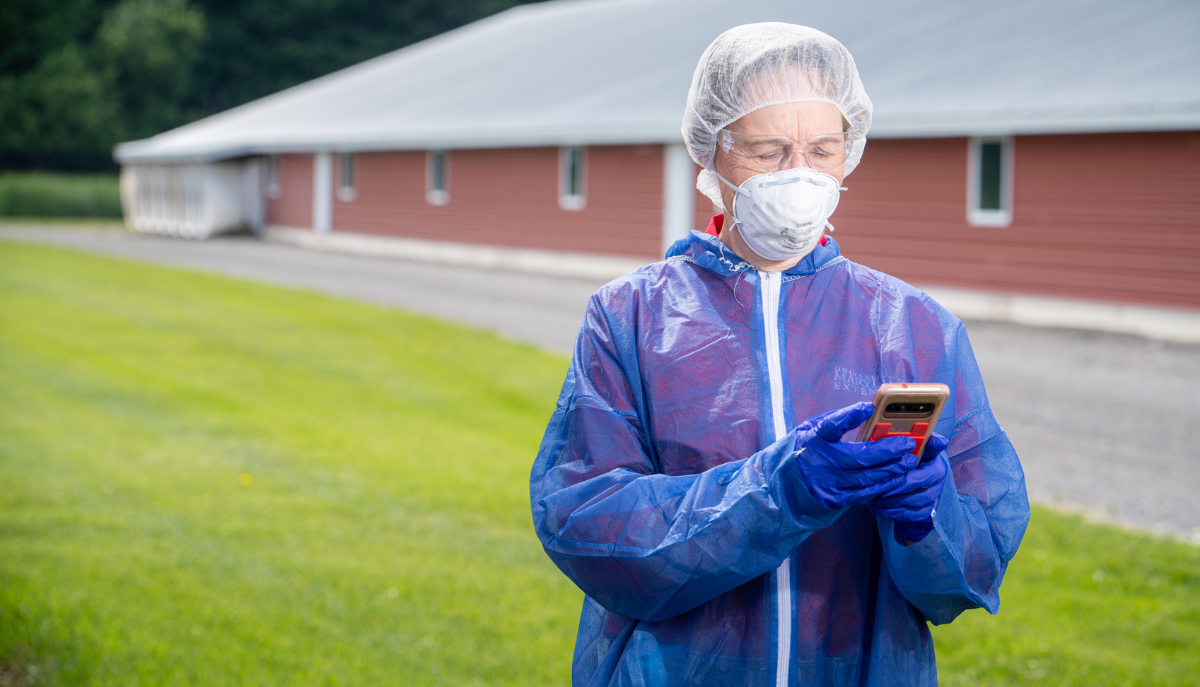
Land-grant universities support the viability of livestock production
From teaching producers biosecurity techniques to keeping poultry cool in extreme temperatures to identifying genetic traits that will optimize production, land-grant university researchers and Extension professionals are supporting the viability of livestock production in the United States.
Here are a few examples of that work:
- Researchers at land-grant universities nationwide are developing and using advanced technologies and data to improve poultry genetics, breeding and production. This is shedding light on genetic mechanisms that influence disease resistance. Findings will help guide strategies to improve poultry health and productivity, reducing losses for producers and providing safer, higher quality poultry products for consumers.
National; Hatch Multistate. See full statement. - In Wyoming, Extension professionals are teaching young producers the skills they need for successful lambing and kidding strategies. The curriculum was developed in response to increased interest in sheep and goat production and is being delivered both virtually and in-person. Access to education in animal husbandry skills increases the long-term success of producers.
University of Wyoming Extension; Smith-Lever (3b&c). See full statement. - Weight loss following the birth of piglets affects future productivity of a sow, often preventing subsequent litters. Researchers in Arkansas are investigating strategies for low-nutrient diets to prevent weight loss during lactation, thus improving the health of the sow for future breeding.
Arkansas Agricultural Experiment Station; Other funding source. See full statement. - In Indiana, researchers are investigating genetic traits that affect growth rate, leanness and feed efficiency in different pork varieties. Using these advanced technologies, researchers are ensuring the longevity and efficiency of pork production.
Purdue University Research; Hatch. See full statement. - Management of temperature in broiler houses is essential to poultry production, particularly in periods of extreme heat. Mississippi researchers are investigating ways to optimize broiler house design and Delaware Extension professionals are teaching producers how to keep poultry cool to increase survivability and decrease stress.
Mississippi Agricultural and Forestry Experiment Station; Hatch Multistate, State Appropriations. See full statement. University of Delaware Cooperative Extension; State Appropriations, Smith-Lever (3b&c). See full statement. - Disease outbreaks can significantly impact livestock producers and decrease availability of meat products for consumers. Extension educators in Wisconsin are teaching farmers best practices for biosecurity through in-person meetings, workshops, articles and educational materials. Recipients of the outreach reported better on-farm safety protocols and a higher likelihood of developing an on-farm biosecurity plan.
University of Wisconsin Extension; State appropriations, Smith-Lever (3b&c). See full statement.