Horticulture programs sprout more resilient communities
Local horticulture is an important tool to combat food insecurity in underserved communities, while boosting environmental sustainability and community health. Volunteers with horticulture training through Extension Master Gardener programs partner with local organizations, schools and vulnerable communities to grow and distribute locally grown produce as well as create jobs.
Here are a few examples of that work:
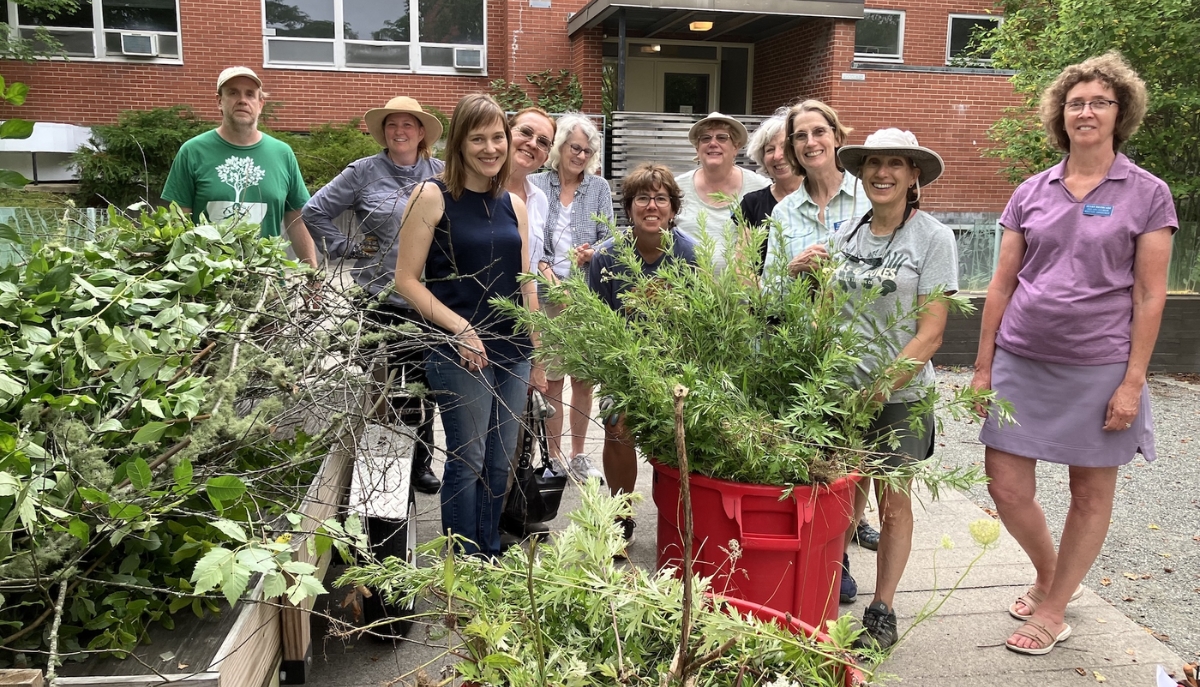
- The Master Gardener program in Rhode Island provides education, hands-on support and resource sharing to address food security and community health. It empowers individuals to grow their own food, adopt environmentally responsible gardening practices and give back through meaningful service projects. As a result, thousands of residents gained access to fresh produce, outdoor learning spaces and technical gardening support.
Rhode Island Cooperative Extension. Supported by Smith-Lever (3b&c) capacity funds. See full statement.
- Extension professionals and partners in Ohio created a horticulture training program to tackle food insecurity and economic challenges. Since 2022, 48 certified participants have launched farms and gardens, created jobs and produced over 3,000 pounds of food. The program participants are reshaping the food landscape, improving nutrition and generating new income in historically disinvested neighborhoods.
Central State University – Extension. Supported by 1890 Extension capacity funds. See full statement.
- Master Gardener volunteers in Mississippi take the knowledge gained from online horticulture training and provide education to residents across the state, extending the reach of university learning. The volunteers contribute to communities by educating the public, promoting sustainable gardening and supporting public beautification efforts, creating stronger, more resilient communities.
Mississippi State University Extension. Supported by Smith-Lever (3b&c) capacity funds. See full statement.
- A multistate effort addressed food insecurity in Indiana by planting, maintaining, harvesting and supporting 25 gardens. In 20 of these gardens, participants also learned practical gardening skills to use at home in addition to learning about how to prepare produce via nutrition education lessons. More than 19,950 pounds of produce was distributed to 43 organizations in 2025.
Purdue Extension. Supported by Smith-Lever (3b&c) capacity funds. See full statement.
- A home horticulture program in Alabama provides urban residents with sustainable practices to manage landscaping, urban gardening and home pests. It includes basic gardening and landscaping training for individuals with limited space. This knowledge can help reduce food insecurity and increase knowledge and skills that are beneficial to the environment.
Alabama Cooperative Extension System – Alabama A&M University. Supported by 1890 Extension capacity funds. See full statement.
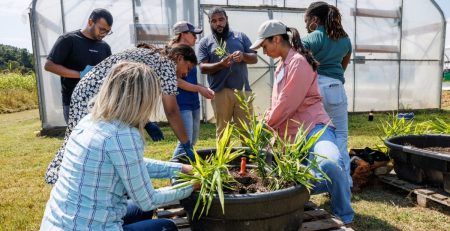
Photo courtesy of Rhode Island Cooperative Extension.