New fruit, vegetable cultivars offer new opportunities for growers
Developing or restoring different fruit and vegetable cultivars allow farmers to plant crops based on disease resistance, fertilizer requirements, adaptations to site-specific soil and weather conditions or greater yields. Some cultivars can be a pathway to new market opportunities and new bio-based products.
Here are a few examples of that work:
- Hemp is re-emerging as the basis of a viable industry and Ohio researchers are developing cultivars suitable to the region. Two divarin-rich cultivars have been identified for breeding lines. The program also creates new hemp-based products, thereby increasing opportunities for hemp growers, processors and agribusinesses. Hemp-based products under development include a hemp-reinforced concrete and a food ingredient.
Central State University – Research. Supported by Evans-Allen capacity funds. See full statement.
- New wheat cultivars are being developed in Georgia to offset yield and quality losses due to pests and disease. Two new cultivars released in 2024 and 2025 are well adapted with high grain yield and good resistance to major prevalent diseases (particularly FHB disease) and insects. They are widely grown by farmers in the region, generating millions of dollars to farmers and the wheat industry. Another 19 wheat cultivars have been licensed since 2016.
University of Georgia Agricultural Experiment Station. Supported by Hatch capacity funds. See full statement.
- Researchers in South Dakota have released four new oat cultivars with a higher yield and stronger disease resistance than current plants and can be used in crop rotations that improve soil health and strengthen whole-farm productivity. The new oat cultivars are expected to increase profit for farmers in South Dakota and the surrounding region. Increasing the productivity and profitability of oats is expected to boost overall oat production in the Northern Great Plains, increasing the total supply, which is crucial for maintaining the affordability of oat-based food products for consumers.
South Dakota Agricultural Experiment Station. Supported by Hatch capacity funds; Hatch Multistate capacity funds. See full statement.
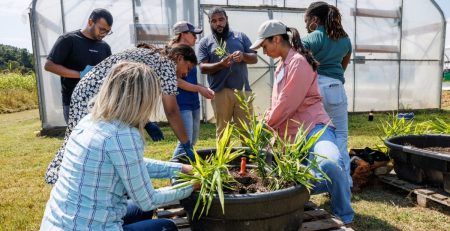
- Ohio researchers are growing African heritage crops to preserve genetic diversity and create new food sources and market opportunities. Continuing the lines of heirloom or heritage crops by saving seeds from one growing season to the next helps growers become self-sufficient, pass on seeds that are well-adjusted to the local environment, preserve critical food biodiversity and develop a consumer market for specific southern crops.
Central State University – Extension. Supported by USDA competitive funds. See full statement.
- A Montana project explored the nitrogen use efficiency (NUE) of different camelina cultivars, identified as an oilseed bioenergy feedstock, so farmers can make informed decisions about which variety to grow. These high NUE cultivars can produce greater yields with less nitrogen input, reducing nitrogen in the environment. The identification of genetic diversities will provide geneticists and plant breeders more information for future bioengineering efforts.
Montana Agricultural Experiment Station. Supported by Hatch Multistate capacity funds. See full statement.
- An Alaska researcher is using a “speed-breeding” process to accelerate the development of suitable varieties of small grain crops, which can improve Alaska’s food production, promote economic development, reduce the importation of expensive animal feed and strengthen Alaska’s food system. The small grain breeding program is one step closer to releasing new varieties of barley, wheat and oats for human consumption, animal feed and use by brewers and distillers.
Alaska Agricultural and Forestry Experiment Station. Supported by Hatch capacity funds. See full statement.
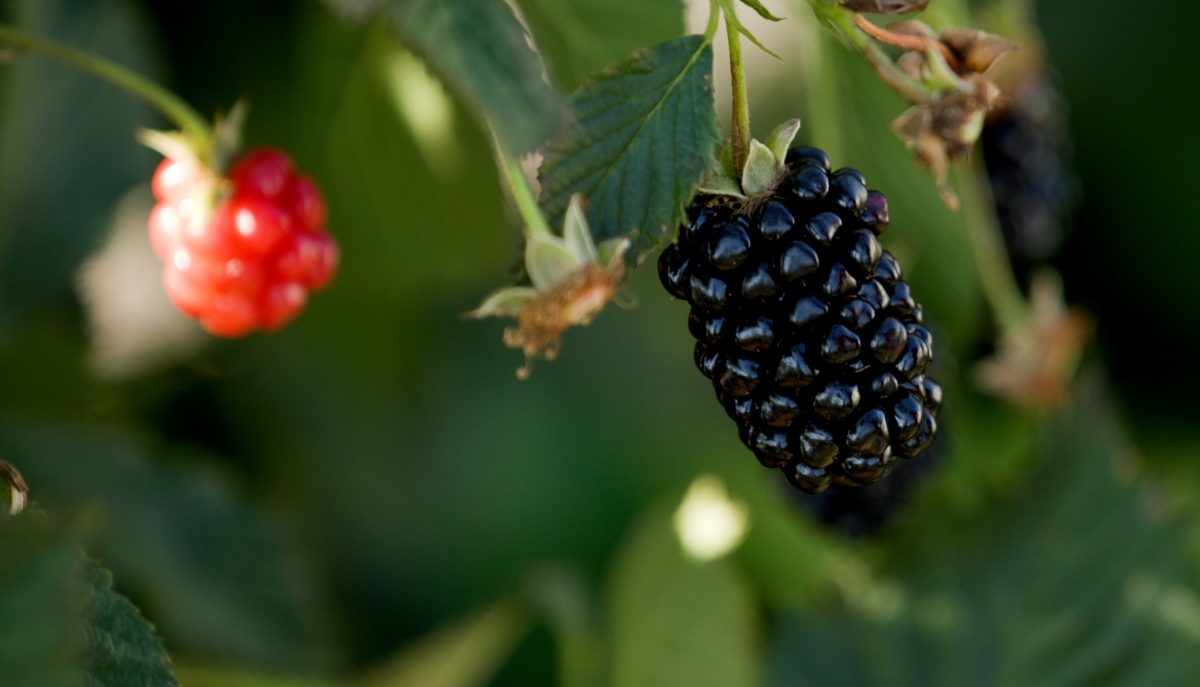
- Researchers in Arkansas have identified the first known genetic locus, the location of a gene on a chromosome, controlling thorn development in blackberries. The genetic markers give breeders the ability to screen seedlings at the DNA level, which saves breeders time and effort. Planting thornless blackberry varieties protects pickers and can prevent damage to the fruit.
Arkansas Agricultural Experiment Station. Supported by AFRI; Hatch capacity funds. See full statement.
A quarter-century quest for black walnuts pays off
After a quarter of a century of breeding efforts, Missouri researchers recently patented the institution’s first black walnut cultivar for nuts — the UMCA® “Hickman” Walnut.
“Hickman” was chosen as the first cultivar to be patented within the species for kernel production — for food production as opposed to timber production — because its characteristics make it uniquely suited to tree nut orchard production.
The cultivar is a significant step toward a long-term goal of furthering the black walnut nut industry in Missouri. The tree produces more nuts for harvest, especially earlier in its life, and more kernel per nut, giving producers opportunity for improved return on investment.
University of Missouri Agriculture Experiment Station. Supported by USDA competitive funds; state appropriations. See full statement.
Photo courtesy of University of Arkansas Division of Agriculture.