
Volunteers help protect and restore local environments
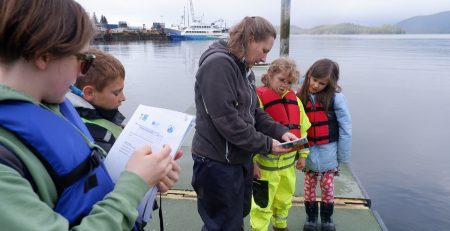
Land-grant universities across the United States are finding ways to engage the public in science and stewardship that address real-world problems in their communities. With training and tools, volunteers are able to collect important data that help scientists, natural resource organizations, community members and the government protect and restore land, air and water resources — and the ecosystem services they provide.
Here are a few examples of that work:
- Extension specialists in California lead community-based projects to engage the public in managing sudden oak death, a disease that has led to the death of tens of thousands of trees in central California. Over 400 residents per year volunteer to help with detecting the disease and producing detailed local maps of its distribution, identifying areas for proactive management. In 2023, volunteers surveyed more than 10,000 trees across 28 communities and sampled approximately 2,000 trees for further testing. Sixty-four land managers received treatment options and technical assistance from the volunteers. Because of these efforts, 6,678 trees were protected. The combined value of oaks protected in 2022 and 2023 is estimated at over $12 million.
University of California Cooperative Extension; State Appropriations, Smith-Lever (3b&c). See full statement. - In Colorado, Native Bee Watch is a community science program that trains and supports volunteers so they can identify and monitor bees. In 2024, 67 volunteers monitored bees and submitted data consistently throughout the summer, contributing over 4,000 plant/bee observations throughout the state. These observations are valuable ecological data that inform local conservation efforts. In addition, 97% of volunteers indicated they have already provided or plan to provide pollinator habitat and native plants on their property.
Colorado State University Extension. See full statement. - For over 25 years, the Water Action Volunteers program in Wisconsin has provided free training and equipment for volunteers to monitor the water quality of their local streams and rivers. In 2023, volunteers monitored 600 unique stream sites across Wisconsin, collecting critical data that biologists, natural resource organizations, local communities and government can use to protect and restore Wisconsin’s waters for all to enjoy.
University of Wisconsin Extension; Smith-Lever (3b&c). See full statement. - In 2024, an Extension program in Florida engaged over 400 urban residents to collect over 10,000 biodiversity observations across the state using just their cellphones. After taking the program, participants were more likely to adopt native landscaping practices, reduce pesticide use and support local conservation initiatives. The program also enhanced environmental outcomes, such as increased native plant diversity and pollinator activity in urban greenspaces.
University of Florida / IFAS Extension; Smith-Lever (3b&c). See full statement. - Extension professionals and Master Gardeners in Wisconsin lead classes, webinars and Q&A sessions to educate horticulturalists, gardeners and other public audiences to better aid pollinators. Over two-thirds of people surveyed indicated that they took tangible action based on the advice they received, such as expanding pollinator habitat, creating bee and butterfly-friendly spaces and reducing pesticide use.
University of Wisconsin Extension; State Appropriations, Smith-Lever (3b&c). See full statement. - An Extension program in Connecticut has empowered communities and individuals to actively address climate challenges. As a result of the program, 40 climate preparations have already been undertaken across communities. Nearly 1,000 participants adopted new strategies. As a result, over 1,000 acres of land have benefited from protective measures, directly contributing to ecological health and resilience.
Connecticut Cooperative Extension System; Smith-Lever (3b&c). See full statement. - An Extension program in Michigan teaches paddlers to identify, report and prevent the spread of aquatic invasive species. The state relies on reports from the public to help in early detection and response efforts. For example, participating in the program recently helped a resident correctly identify an invasive plant that had never been found in Michigan before. Early detection provided a better opportunity for successful control and eradication.
Michigan State University Extension; Smith-Lever (3b&c). See full statement. - As part of an Extension program in Vermont, 24 participants signed up to monitor forest pests, distribute literature and provide educational outreach to others in their communities. Training volunteers to be on the front line of defense will help control the spread of the emerald ash borer, hemlock woolly adelgid and other invasive forest pests that can cause economic and ecological damage to Vermont’s vast forests.
University of Vermont Extension; State Appropriations, Smith-Lever (3b&c). See full statement. - To engage communities in sustainable tree care practices and promote healthier urban forests, Extension professionals in Vermont hosted tree pruning workshops for homeowners and community volunteers. Proper pruning techniques will help promote tree health and longevity.
University of Vermont Extension; Non-Profit Grants & Contracts. See full statement. - A birding program in Texas educated community members, landowners and birders about management practices that enrich songbird habitat without impairing agriculture enterprises. In particular, the program discussed ecotourism opportunities birding can present. Following the program’s activities, counties experienced $24,000 in sales.
Texas A&M AgriLife Extension; State Appropriations, County Funding. See full statement. - An Extension program in New York has recruited and trained over 2,480 volunteers to provide localized data on deer damage to vegetation and forest regeneration. In particular, hundreds of landowners participate each year, representing thousands of forested acres. Landowners are trained to recognize signs of deer over-browsing and how to take appropriate management actions (e.g., hunting, fencing or slash walls) on their properties, if desired.
Cornell Cooperative Extension; Smith-Lever (3b&c). See full statement.
Photo courtesy of University of Vermont Extension.