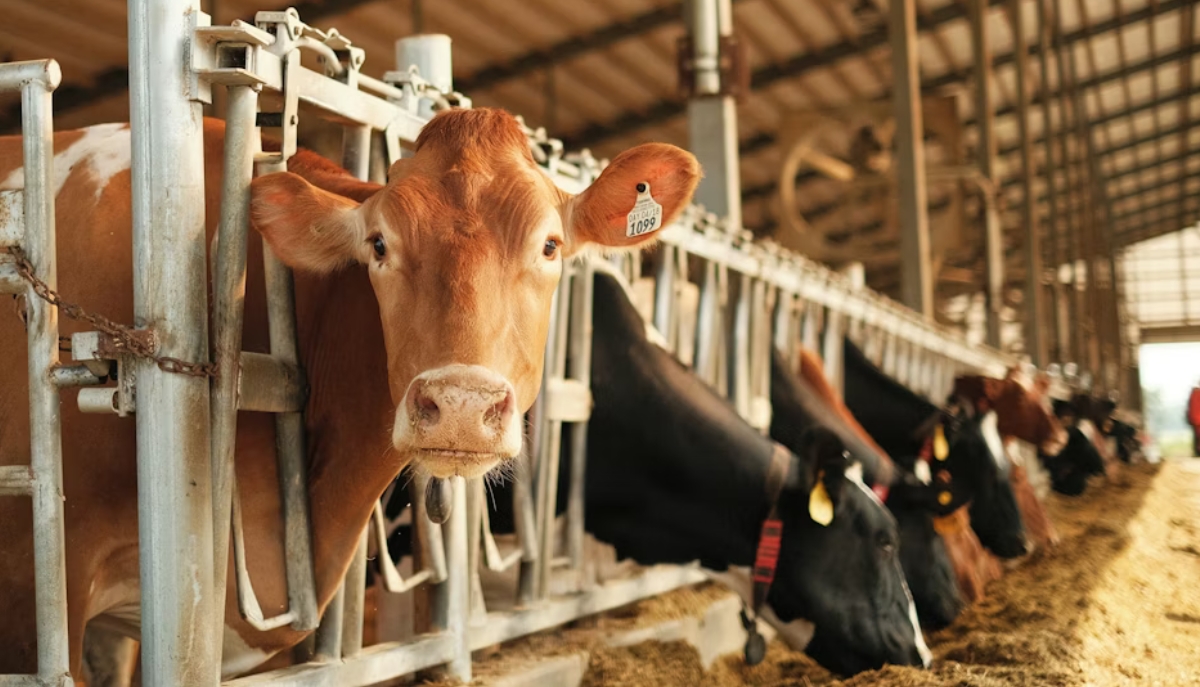
Supporting meat and dairy industries
Meat and dairy provide critical protein and a wide variety of other products for consumers and represent economically important industries across the country, not just for producers, but also for processors, groceries and restaurants. Research and Extension professionals at land-grant institutions support livestock and related industries in many ways through education on economically efficient production practices and research on ways to protect and improve animal health and food safety and quality.
Here are a few examples of that work:
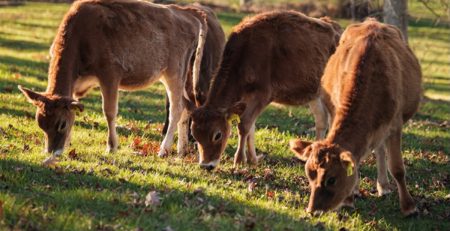
- Dairy cattle eat less, produce less milk and are at increased risk of infection in high heat. The growing threat of heat extremes represents an estimated $245 million in lost revenue for the Midwest dairy industry. Researchers in Illinois evaluated the impacts of extreme heat in nine states and projected losses could increase up to 30% by 2050. Small dairies are disproportionately affected. The study explored potential changes in infrastructure and policy to maintain a thriving dairy industry — and this important source of high-quality food.
Illinois Agricultural Experiment Station. Supported by state appropriations; USDA competitive funds. See full statement.
- To address economic challenges facing the dairy industry in Puerto Rico, Extension has been providing new field demos and technical presentations on electric fencing for rotational grazing, including information on available incentives, to support more profitable and agronomically sound pasture management systems. Nearly half those who attended events indicated plans to adopt electric fencing in the next year.
University of Puerto Rico Agricultural Extension Service. Supported by Smith-Lever (3b&c) capacity funds. See full statement.
- Roughly 235 state and 50 federal meat processors are an important part of agricultural and rural communities in Montana. Training in meat science and food safety allows processors to stay in business and produce high quality products, maintaining their critical contributions to the state’s economy.
Montana Agricultural Experiment Station; MSU Extension. See full statement.
- Overuse of antibiotics and dewormers in animal production has led to development of parasite resistance and food safety concerns. To address these challenges, Arkansas researchers are studying the potential of natural immunomodulators for sheep — specifically sericea lespedeza and walnut hull powder — to improve gastrointestinal function and immune response.
University of Arkansas at Pine Bluff Agricultural Research Station. Supported by USDA Capacity – Research; Evans-Allen capacity funds. See full statement.
- Freezing beef for long-term storage can reduce meat quality. To understand the factors that cause frozen beef quality to deteriorate, meat scientists in Arkansas collaborated on a project that found larger cuts and packaging matter more than freezer type for meat quality and consumer acceptability.
Arkansas Agricultural Experiment Station. Supported by nonprofit grants and contracts; state appropriations. See full statement.