Strengthening youth development through experiential learning
Experiential learning equips young people with hands-on skills, critical thinking abilities and real-world problem-solving experiences that strengthen academic success, workforce readiness and lifelong learning. Through community-based programs, 1890 land-grant universities play a vital role in ensuing opportunities by connecting research, Extension, and education to support youth and prepare the next generation of leaders.
Here are a few examples of that work:
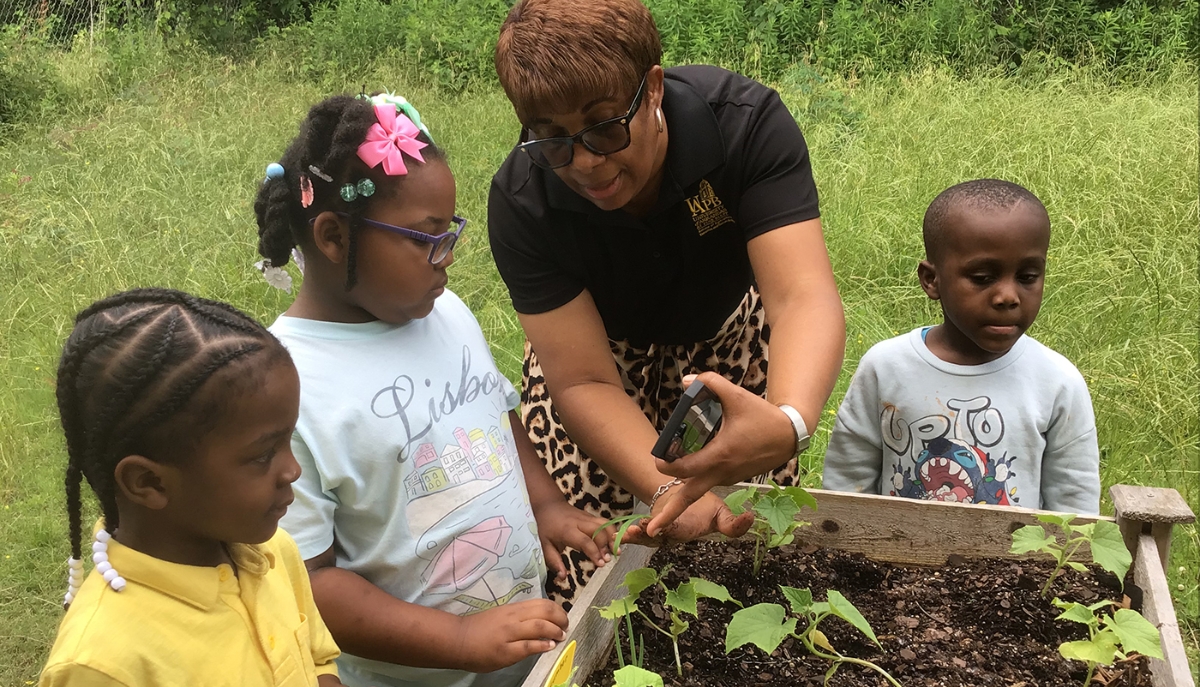
- Faculty and students partnered with a local preschool to deliver hands-on gardening lessons that helped children learn where food comes from while building healthy eating habits and environmental awareness in Arkansas communities. Preschoolers developed observation and life skills while families and the broader community benefited from strengthened nutrition education, sustainability practices and early STEM engagement.
University of Arkansas Cooperative Extension Services- University of Arkansas at Pine Bluff. Supported by USDA Capacity – Extension. See full statement.
- In Maryland, faculty-mentored undergraduate research embedded in capstone courses provided students with hands-on laboratory and field experiences that strengthened critical thinking, research skills and real-world problem-solving. As a result, participating students secured competitive internships and jobs, published scholarly work, gained admission to top graduate programs and improved graduation outcomes — demonstrating the value of experiential learning in building a skilled agricultural and STEM workforce.
University of Maryland Eastern Shore. See full statement.
- Through a youth resistance skills training initiative, participants in Alabama gained critical decision-making, communication and refusal skills that strengthened their ability to resist drugs, alcohol and tobacco. As a result, over 300 youth increased knowledge of substance-use risks and demonstrated improved capacity to promote healthier behaviors among peers and within their communities.
Alabama Cooperative Extension System-Alabama A&M University. See full statement.
- In Ohio, a hands-on soilless agriculture program engaged 288 youth in learning hydroponic and aeroponic food production, increasing agricultural literacy and understanding of efficient, urban-friendly growing systems. As a result, students gained practical skills in crop management and food safety, harvested and consumed their own produce and developed greater awareness of sustainable solutions to improve food access and reduce food insecurity.
Central State University Extension System. Supported by 1890 Extension capacity funds. See full statement.
- West Virginia 4-H’s Yellow Jackets CyberDefender Program delivered hands-on cybersecurity education to more than 370 K–12 students through summer camps, school-based lessons and campus innovation experiences across the state, strengthening digital literacy and awareness of STEM career pathways. As a result, nearly 60% of participants reported increased interest in cybersecurity and over half expressed interest in pursuing related careers.
West Virgina State University Cooperative Extension Program. Supported by 1890 Extension capacity funds; USDA Capacity – Extension. See full statement.
- Tennessee 4-H expanded youth development capacity statewide by deploying near-peer college interns as mentors at three summer camps, supporting 2,922 youth through enhanced STEM, agriculture, and leadership programming. As a result, camps improved staff-to-youth ratios and program quality while interns gained workforce-ready skills, strengthening both youth outcomes and the future Extension workforce.
Tennessee State University Agricultural Research Center. Supported by 1890 Extension capacity funds; USDA Competitive funds. See full statement.
Photo courtesy of University of Arkansas Cooperative Extension Service – University of Arkansas at Pine Bluff.