
Strengthening water quality across landscapes
Access to clean, reliable water for communities, ecosystems and agriculture is increasingly threatened by issues such as nutrient pollution and emerging contaminants. Land‑grant universities are addressing these challenges through innovative research and hands‑on Extension programming that empowers volunteers, land managers and future water‑quality stewards.
Here are a few examples of that work:
- Researchers in Montana found evidence that wetland conservation can lead to substantial reduction in ammonia and phosphorous concentrations in watersheds. Their study will help policymakers better understand how voluntary wetland restoration may be used as a strategy to mitigate non-point source water pollution.
Montana Agricultural Experiment Station. Supported by Hatch Multistate capacity funds. See full statement.
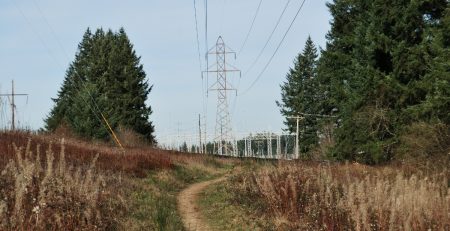
- Decades of continuous grazing along the Skunk Creek in South Dakota has weakened the stream banks, reduced plant cover and increased sediment and nutrient flow downstream. Researchers used a decade of data to study the impact of resting riparian areas from grazing during the growing season, finding the public benefits exceeded costs, producers gained healthier pasture, and the practice improved stream health.
South Dakota Agricultural Experiment Station. Supported by McIntire-Stennis capacity funds; Hatch capacity funds. See full statement.
- PFAS (per- and poly-fluoroalkyl substances) are persistent organic pollutants, making their removal or degradation in water resources challenging. A research team in Georgia discovered a process for cleaning PFAS-contaminated water by using electrooxidation. The team patented the technology, now licensed by a multi-national engineering consulting company, providing one of the first practical technologies to destruct PFAS at scale.
University of Georgia Agricultural Experiment Station. See full statement.
- Extension professionals in Rhode Island designed a Watershed Watch program to train and support volunteers in monitoring lakes, rivers, ponds and coastal waters. The hands-on education, bilingual outreach and strategic partnerships with community organizations provides a platform for gathering high-quality data that can be used by municipalities, nonprofits and agencies to inform public health decisions, secure funding and implement watershed protection and restoration efforts.
Rhode Island Cooperative Extension. Supported by Smith-Lever (3b&c) capacity funds; non-profit grants and contracts. See full statement.
- A research team in Ohio studied four wastewater treatment facilities to examine the impact of discharge on microbial communities in rivers and fish. They examined how treated wastewater discharge influences river microbial communities and identified resistance traits that persist in aquatic environments, providing guidance for future water management practices and policy decisions.
Ohio Agricultural Research and Development Center. Supported by AFRI. See full statement.
Photo courtesy of South Dakota Agricultural Experiment Station.