
Research provides more sustainable pest management options
Agricultural land and natural ecosystems face growing threats from invasive and noxious grasses and weeds, feral animals, pests and diseases that impair ecosystem services and agricultural productivity. Chemical pesticides can pose human and environmental health risks. Land-grant university research had led to findings, tools and strategies for managing pests more sustainably.
Here are a few examples of that work:
- Research and Extension in Arizona helped reduce chemical pesticide use among cotton growers to all-time lows. Cotton growers saved over $600 million while preventing 40 million pounds of insecticides from entering the environment.
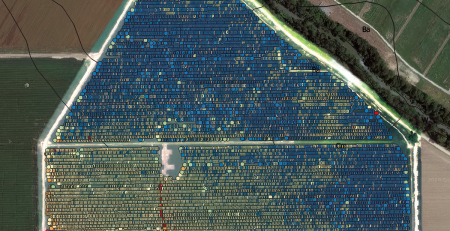
Arizona Agricultural Experiment Station; Integrated (Water Quality, Methyl Bromide Transition, Organic Transition, Crop Protection/Pest Mgt, RRDCs, Food and Ag Defense Initiative). See full statement. - Researchers in Guam use drones to collect data for efficient monitoring of invasive coconut rhino beetles that cause severe damage to Palau’s coconut palms, an important economic resource. This helps Palau’s officials prioritize the most vulnerable sites and will provide a baseline for effective control methods.
University of Guam Western Pacific Tropical Research Center. See full statement. - In Louisiana, researchers are breeding a new cold-tolerant salvinia weevil population to help manage giant salvinia, an invasive floating weed that damages aquatic ecosystems. By reducing herbicide use or mechanical control, the salvinia weevil program reduces management costs and supports the resilience of freshwater bodies.
Louisiana State University Ag Center; Hatch Multistate, Hatch. See full statement. - In Guam, researchers demonstrated a faster, cheaper way to remove an invasive tree with very little adverse impact on the forest understory if enough native forest trees are in the canopy to fill in the gaps.
University of Guam Western Pacific Tropical Research Center. See full statement. - Scientists in Wisconsin used a 20-year time series of samples collected from Lake Mendota and gene-based microbiome surveys to detect changes in the microbial community. They showed that the invasive spiny water flea and zebra mussel can disrupt a lake’s “good” microbial communities and negatively impact water quality. This important finding improves models that predict the health of freshwater lakes.
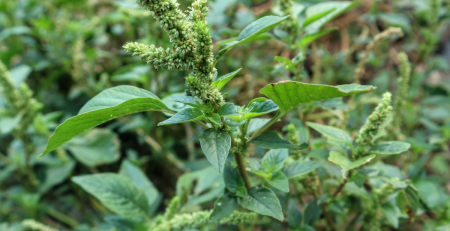
Wisconsin Agricultural Experiment Station; Hatch. See full statement. - Mowing is often used to destroy the noxious weed silverleaf nightshade, but researchers in Arkansas found that mowing can actually stimulate the plant to grow deeper roots and more robust seeds and increase the toxicity in the flowers, all of which can increase the plant’s chances of survival. Now, land managers and property owners know to prioritize more effective strategies for silverleaf nightshade.
Arkansas Agricultural Experiment Station; State Appropriations, Hatch. See full statement.
Photo courtesy of Arkansas Agricultural Experiment Station.