New solutions to support extended growing seasons for colder climates
Extending the growing season in colder climates can be challenging for small and mid-sized farms, especially in the northeastern U.S. Commercial greenhouses tend to be cost-prohibitive due to high energy demands. Another challenge faced in northern regions is winter waste management on livestock operations, when soils are often impermeable and microbial decomposition slows.
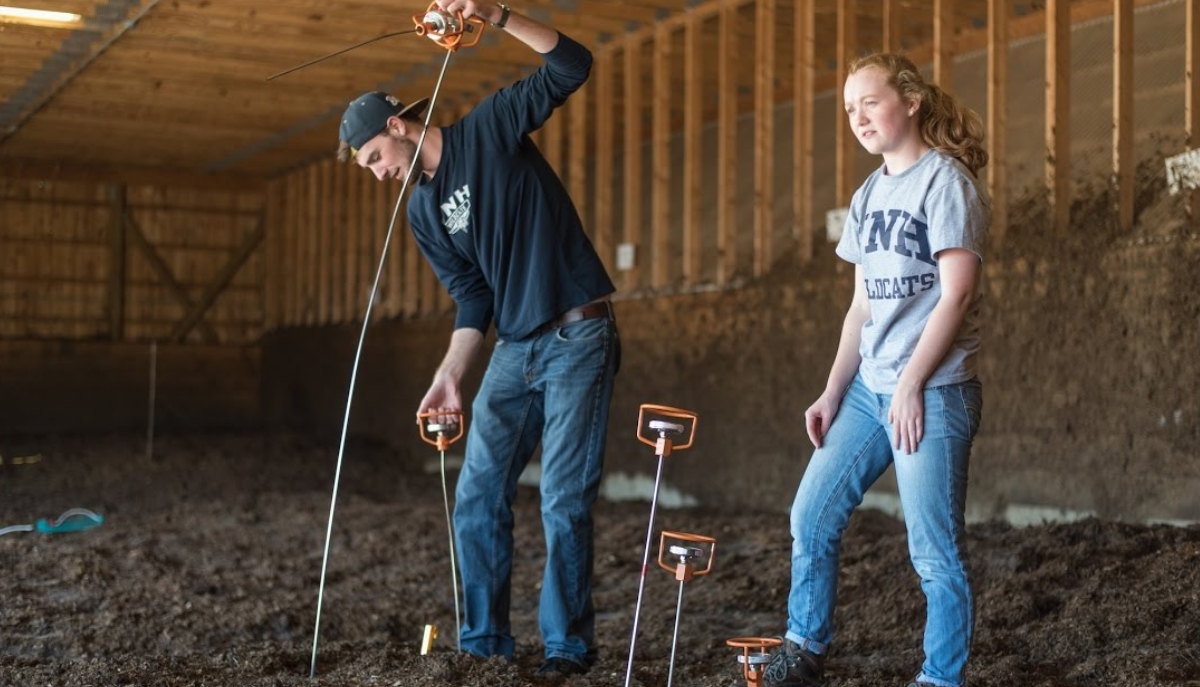
Scientists at the University of New Hampshire are developing and testing two manure-powered heating systems to make protected agriculture more viable in cold climates. This pilot project uses automated sensors track temperature, air quality and energy efficiency to grow hydroponic lettuce. Both systems utilize heat generated from composting manure from university livestock operations and waste hay, with one system heating water for greenhouse circulation and the other filtering and circulating heated compost air.
Over a three-year period, the team will evaluate heat output, lettuce yields and economic feasibility. Early outcomes also suggest that the technology is adaptable and scalable, demonstrating benefits for operations at different scales. This low-cost, sustainable heating solution provides the benefit of managing waste and has the potential to both strengthen local food systems and provide diversification opportunities for small and mid-size operations.
New Hampshire Agricultural Experiment Station | Project supported by Hatch capacity funds. Photo courtesy of Jeremy Gasowski/UNH Marketing.