Land-grant universities drive sustainability through innovative agricultural practices
The 1890 land-grant universities are dedicated to improving the well-being of economically challenged communities. By focusing on sustainable practices, these institutions help address key challenges like food security, environmental stewardship and economic resilience. Through research, Extension and education, they equip farmers and communities with innovative techniques that preserve resources for future generations.
Here are a few examples of that work:
- Researchers and students in Ohio developed low-cost robotic solutions for small-scale raspberry farms to automate labor-intensive tasks of mowing and irrigation management, improving efficiency and profitability.
Central State University – Research; USDA Capacity – Research. See full statement.
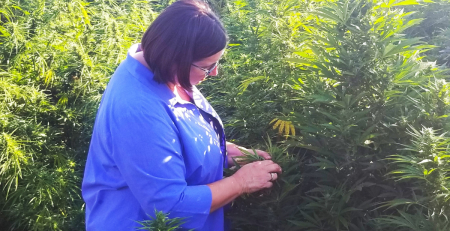
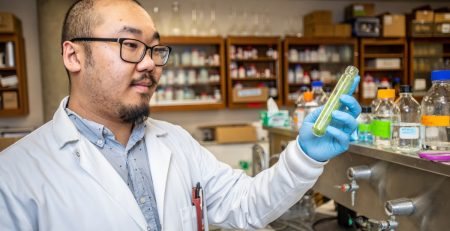
- Traditional disinfectants to reduce the spread of viral diseases such as COVID-19 can be a major public health concern if not handled properly. Researchers in North Carolina found that mushroom and hemp extracts can potentially be used to create an alternative, safer disinfectant.
North Carolina A&T State University Agricultural Research Station; Evans-Alan. See full statement.
- The Keeping it in the Family Program in Arkansas helps landowners retain their land. Recently, a landowner was able to avoid and under-valued sale and retain her family land. The program helped her secure a large conservation contract that has supported her efforts to enhance her farm and timber stand by improving floodplain connectivity, protecting wildlife habitat, native plants and soil quality and reducing wildfire risk.
University of Arkansas Cooperative Extension Service – University of Arkansas at Pine Bluff. See full statement.
- In Africa, pesticide workers often lack standardized personal protective equipment (PPE), leading to exposure risks. Those with PPE struggle with heat stress and discomfort. Researchers in Maryland worked with a Kenyan governmental entity, chemical company BASF and agricultural technology company Syngenta to develop a new protective garment for farmers and pesticide operators.
University of Maryland – Eastern Shore; Evans-Alan. See full statement.
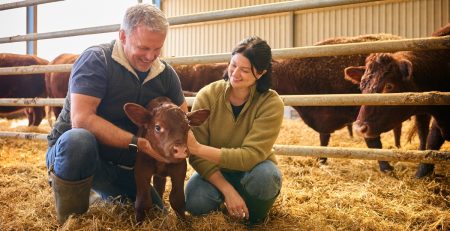
- Extension professionals in Alabama improved profitability and sustainability for 69 small beef cattle and goat producers. Participants enhanced pasture forage quality, animal nutrition and profits through better soil testing, rotation and forage use.
Tuskegee University Cooperative Extension Program; Other USDA Capacity – Extension, 1890 Extension. See full statement.
- Extension professionals in Georgia worked with AgriUnity LLC to help small beef cattle farmers improve production and marketing. In 2024, 95% of farmers improved cattle quality, 85% enhanced record keeping and herd management, 71% improved soil health, and 82% planted winter forages to reduce costs.
Fort Valley State University Cooperative Extension Program; USDA Competitive, Private Grants & Contracts. See full statement.
- In Oklahoma, researchers conducted a series of experiments that provided important information on the viability of brackish water for livestock in regions where freshwater resources are constrained, benefiting small ruminant producers.
Langston University Agricultural Research Station; USDA Capacity – Research, Evans-Alan. See full statement.
- A program in West Virginia is addressing gaps in agricultural education, creating clear career pathways. The program benefits its participants while also supporting communities across the state and beyond, helping to build a sustainable future for agriculture.
West Virginia State University Cooperative Extension Program; USDA Competitive. See full statement.
- Researchers in Tennessee identified the cause of vascular streak dieback and are developing a diagnostic tool. They collaborated with industry partners to identify fungicide treatments and tolerant species.
Tennessee State University Agricultural Research and Extension Center; Other USDA Competitive, Evans-Alan. See full statement.
- In Arkansas, sweet potatoes provide essential economic value to small-scale farmers. Research is underway to understand the potential impact of weeds as hosts of
viruses and insects that can affect crop yield and to develop effective control measure recommendations.
University of Arkansas at Pine Bluff Agricultural Research Station; other USDA capacity – Research. See full statement.
- In Texas, The Urban Agriculture Program partnered with researchers, agencies and community groups to support farmers and producers in addressing extreme weather events and soil limitations.
Prairie View A&M University Cooperative Extension Program; Other USDA Capacity – Extension. See full statement.