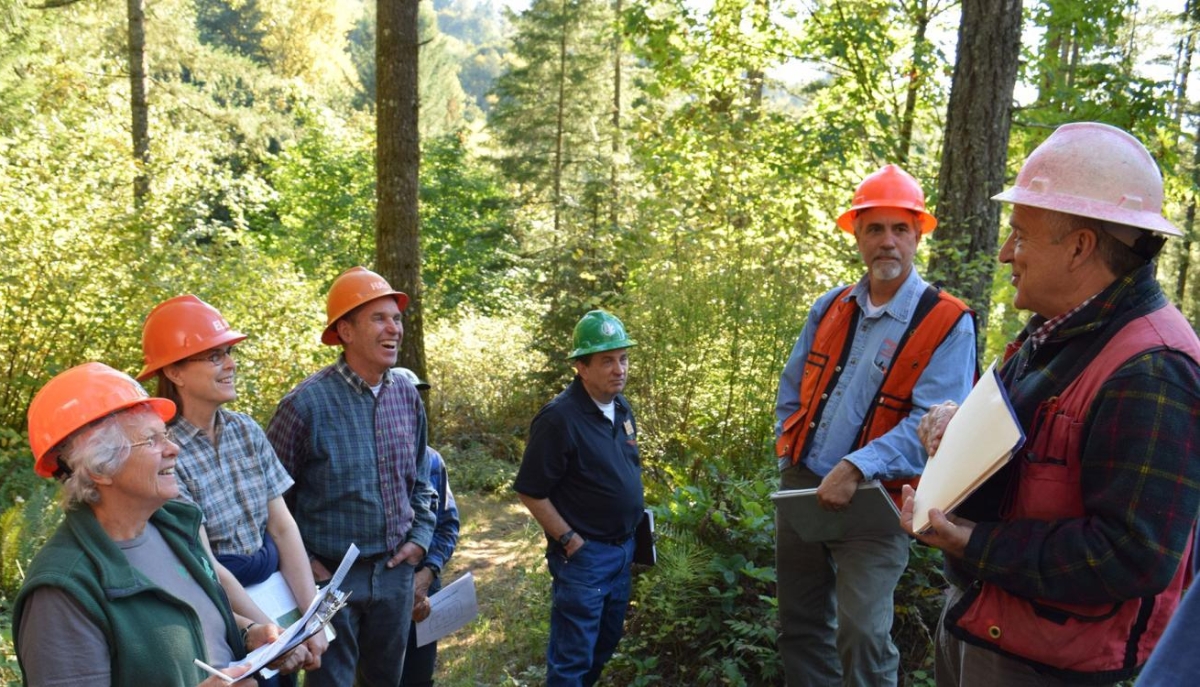
Protecting private forests by growing good stewardship
More than half of forest land in the United States is privately owned. This land produces nearly all of the harvested timber that is used for building houses or made into forest products. Practicing good stewardship of private lands is important for ecosystem and community health. Because the more than 10 million private owners of these lands are often non-professionals, they face several challenges in managing their properties. Land-grant universities provide critical resources and training for these landowners to help them manage risks as well as grow their knowledge of best practices for sustainable forest stewardship.
Here are a few examples of that work:
- Extension professionals in Iowa revised and modernized a historical program to empower stewards of private woodlands to build management plans, grow knowledge of woodland management practices and connect with professional foresters and other private landowners. This hybrid, multi-mode program is empowering stewards to achieve tangible positive results in the lands they influence.
Iowa State University Extension and Outreach. Supported by Smith-Lever (3b&c) capacity funds; state appropriations. See full statement.
- Nearly 70% of the 16 million acres of Wisconsin’s forested land are privately owned, but less than a quarter of these landowners have a management plan to help make sustainable harvesting decisions. Extension educators in Wisconsin launched a project to connect private landowners with a consulting forester and cost-share funds to create and implement Forest Stewardship Plans, helping to maintain ecosystem services while providing forest products to support the state’s economy.
University of Wisconsin Extension. Supported by Smith-Lever (3b&c) capacity funds. See full statement.
- Through surveys, interviews and spatial analyses, researchers in Pennsylvania found that private forest landowners valued prescribed fires as a forest management tool but lacked a skilled workforce and economic base to support controlled burning. As a result of this four-state study, a public-private organization launched a training program to certify professionals to burn on private lands.
Pennsylvania Agricultural Experiment Station. Supported by Hatch capacity funds. See full statement.
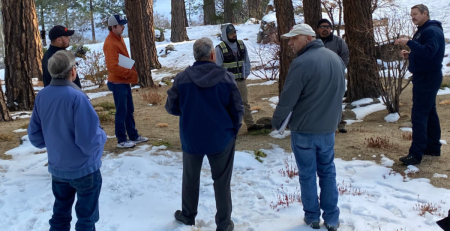
- To support private woodland owners in making smarter forest management decisions, Extension educators in Oregon have trained more than 600 Master Woodland Managers to extend technical forestry expertise into rural communities. These volunteers are helping to increase active management and to create forest management plans. Additionally, Extension developed and tested a low-cost, easy-to-use measurement tool to aid small woodland owners in making forest management decisions and reduce unnecessary expenses.
Oregon State University Extension Service. Supported by state appropriations. See full statement and additional statement.
- West Virginia Extension educators developed a series of workshops to engage private forest landowners who may not want to log or harvest timber on their properties with alternative practices such as streamside restoration, agroforestry and forest farming methods. These trainings help private landowners protect their forests by actively managing their properties as a living ecosystem that can give them food, fuel and additional income.
West Virginia State University Cooperative Extension Program. Supported by USDA Capacity – Extension & 1890 Extension Capacity Funds. See full statement.
Photo courtesy of Oregon State University Extension Service.