New vaccine and delivery system protect catfish against fatal disease, reduce antibiotic reliance
Catfish is the largest aquaculture industry in the United States. For decades, catfish producers have struggled against pervasive infestation from E. ictaluri, which mainly affects fingerlings (juveniles), targeting the fish’s brain and resulting in abnormal behavior and swimming patterns, swelling, ulcers and death. ESC has been treated with antibiotics delivered through feed. However, as orders for medicated feed rose substantially around 2013, the bacterium began to develop antimicrobial resistance, rendering the treatment less effective. The economic impact of ESC has threatened the viability of the catfish industry in many areas, causing losses of between $14 million and $45 million annually.
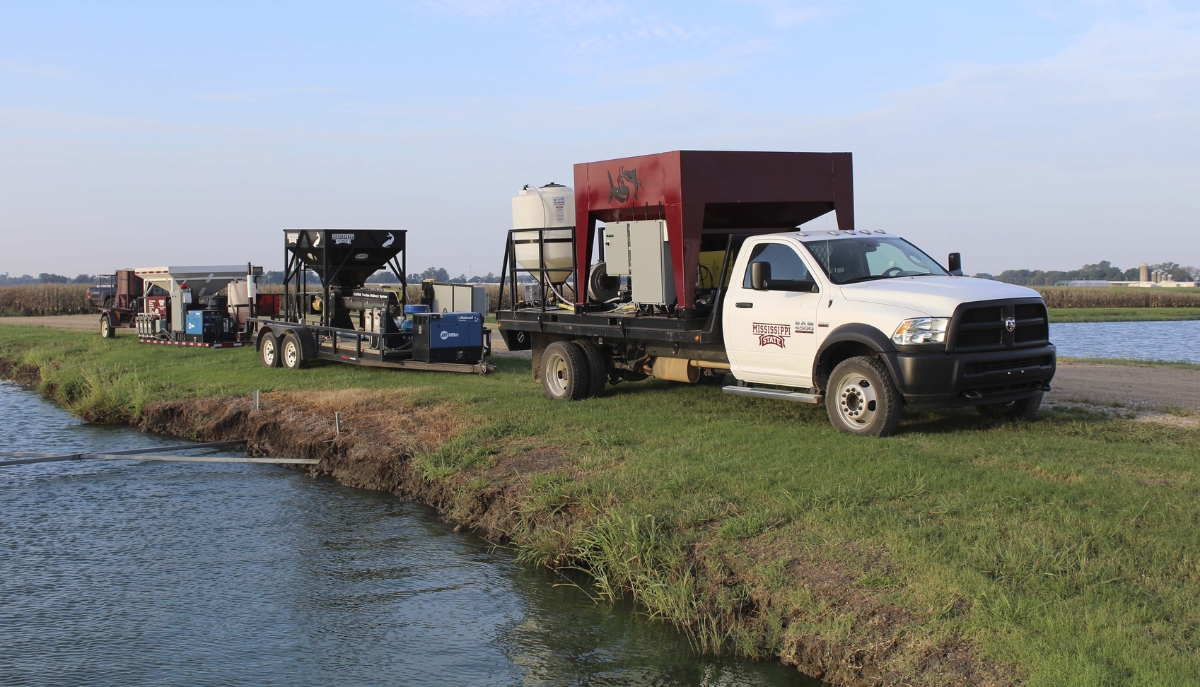
Scientists at Mississippi State University’s Agricultural and Forestry Experiment Station, with partners in the College of Veterinary Medicine and USDA, have now developed a novel, live-attenuated oral vaccine and delivery platform to prevent the spread of ESC in catfish. The ESC vaccine has significantly improved fingerling survival rates, allowing fish to reach full growth. This outcome is already changing the fate of the industry, improving profits for catfish farmers, reducing reliance on antibiotics and ensuring a secure supply of safe, healthy U.S.-produced catfish for consumers.
Mississippi Agricultural & Forestry Experiment Station | Project supported by AFRI; Hatch capacity funds. Photo courtesy of Kenner Patton/Mississippi State University.