Author - kscotto@aplu.org

a farmer standing in a corn field

Indiana farmers improve technical knowledge through revived Purdue on-farm visit program

After two years of COVID-19 procedures and protocol, Purdue Extension’s connections with Indiana farmers were limited as virtual experiences replaced in-person activities. In response, Purdue Extension developed “Purdue On The Farm” to re-connect and increase direct contact between Purdue Extension educators and Indiana farmers to build and enhance relationships, understand perception and practices and generate data to underpin recommendations. Purdue on [...]

Read more...
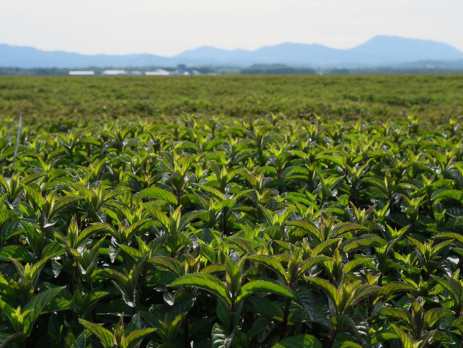
mint field in Oregon with mountain range in the background

Informing mint growers to reduce pesticide harm

The Oregon mint production industry had an estimated $28.7 million value in 2022. Losses from pests like mint root borer and variegated cutworm can eat into farmers’ profits, but the pesticide traditionally used to control these pests was phased out for use in food crops by the U.S. Environmental Protection Agency in 2022. Farmers now must use a newer [...]

Read more...
a hand holding a hemp plant

Crowdsourced data impact industrial hemp operations

In 2018, domestic hemp production became legal in the United States for the first time in nearly 70 years. Industrial hemp can be grown to produce fiber, grain and cannabinoids. Some cannabinoids (CBD and CBG, for example) determine profitability potential, while one cannabinoid (THC) determines compliance. Growers must grow hemp crops which test below 0.3% THC to be compliant [...]

Read more...
a tractor spraying pesticides

Farm pesticide training program decreases drift complaints in Georgia

For many family farms, pesticides provide the foundation for effective pest management. The U.S. Environmental Protection Agency’s pursuit of protecting endangered species in accordance with the Endangered Species Act is challenging the practical use of these tools. In response, University of Farm pesticide training program decreases drift complaints in Georgia Extension participates in a joint effort that protects both family [...]

Read more...
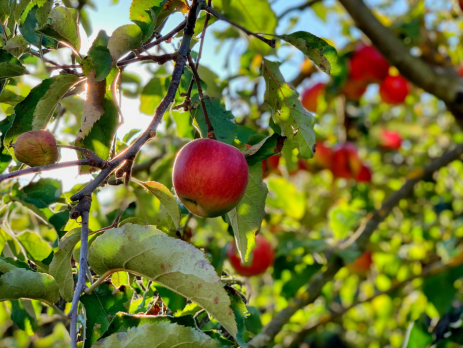
apple tree

Smaller trees produce larger yield

North Carolina ranks seventh in the nation in apple production with nearly 4 million bushels of apples — more than 150 million pounds — produced each year. The majority of these apples are used in the processing industry and turned into food items like applesauce, baby food, juice and other packaged products. Extension specialists at North Carolina State University are [...]

Read more...
a person checking on lettuce crop

Flexible training for new vegetable farmers in Connecticut

In Connecticut, new and beginning vegetable farmers are frequently first-generation farmers who also juggle off-farm jobs. These farmers need flexible training and support to build a thriving business that remains economically viable. To support these farmers, UConn Extension has developed an online, asynchronous vegetable production certificate course for farmers who have less than three years of experience growing vegetables. Participants [...]

Read more...
pigs

Extension improves biosecurity practices for livestock producers

Biosecurity affects the economic sustainability and viability of livestock producers as disease outbreaks can be exceedingly expensive for producers. Disease outbreaks can cause catastrophic livestock losses including the depopulation of whole herds or loss of newborn animals. For example, the 2013 porcine epidemic diarrhea virus spread across 13 states in less than two months and resulted in the death [...]

Read more...
closeup shot of turfgrass on a soccer field

Strengthening, beautifying turfgrass on the pitch

Natural grass is used in 70% of all soccer stadiums and practice fields in Mexico. However, turfgrass managers lacked professional, research-based support for managing these fields. University of Georgia Cooperative Extension was invited to help develop a certification system that trained more than 200 turfgrass professionals in Mexico’s premier soccer leagues — Liga MX, the top professional men’s soccer division, [...]

Read more...
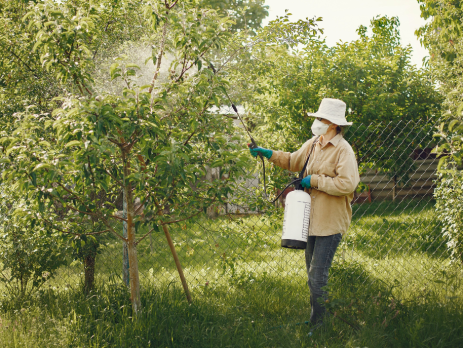
a woman wearing PPE sprays pesticides on a tree

Proper clothes laundering lowers pesticide risk

Without proper safety precautions, pesticides may harm people. Farmers and others may become exposed to pesticides from residue on work clothing. In a survey of pesticide applicators conducted by University of Minnesota Extension, only 15% of applicators said they follow pesticide labels for clothing selection. Because 45% of respondents had someone else wash their contaminated clothing, those family members may [...]

Read more...
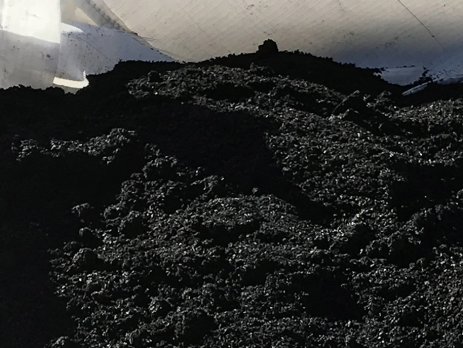
a bag of biochar

Researching biochar as a soil additive to increase profits, yields

Researchers at the University of Arkansas Pine Bluff Agricultural Research Station have found ways to solve two major challenges related to soil contamination and sub-optimal growth through the use of biochar – charcoal made from biomass. Biochar products can be used as a sustainable soil additive to capture agricultural chemicals. The product is added through conventional tillage and helps degrade [...]

Read more...