Tech solutions for livestock management
Livestock producers face challenges such a shrinking labor force, limited veterinary access and rising costs. Artificial intelligence, precision agriculture technologies and genome sequencing have shown promise in improving livestock management, but up-front costs have generally restricted adoption to large-scale dairies. Small farms need economically feasible, effective tools tailored to their specific operations.
Here are a few examples of that work:
- Researchers in Oklahoma have launched a student-led initiative integrating artificial intelligence and small ruminant management by using photos and videos of goats. This collection includes a wide variety of breeds and age groups of goats, which will be used to build a high-quality dataset to train a computer vision model capable of recognizing individual goats.
Langston University Agricultural Research; Sherman Lewis School of Agriculture and Applied Sciences; Illinois Agricultural Experiment Station. Supported by USDA Capacity – Research; Evans-Allen capacity funds. See full statement.
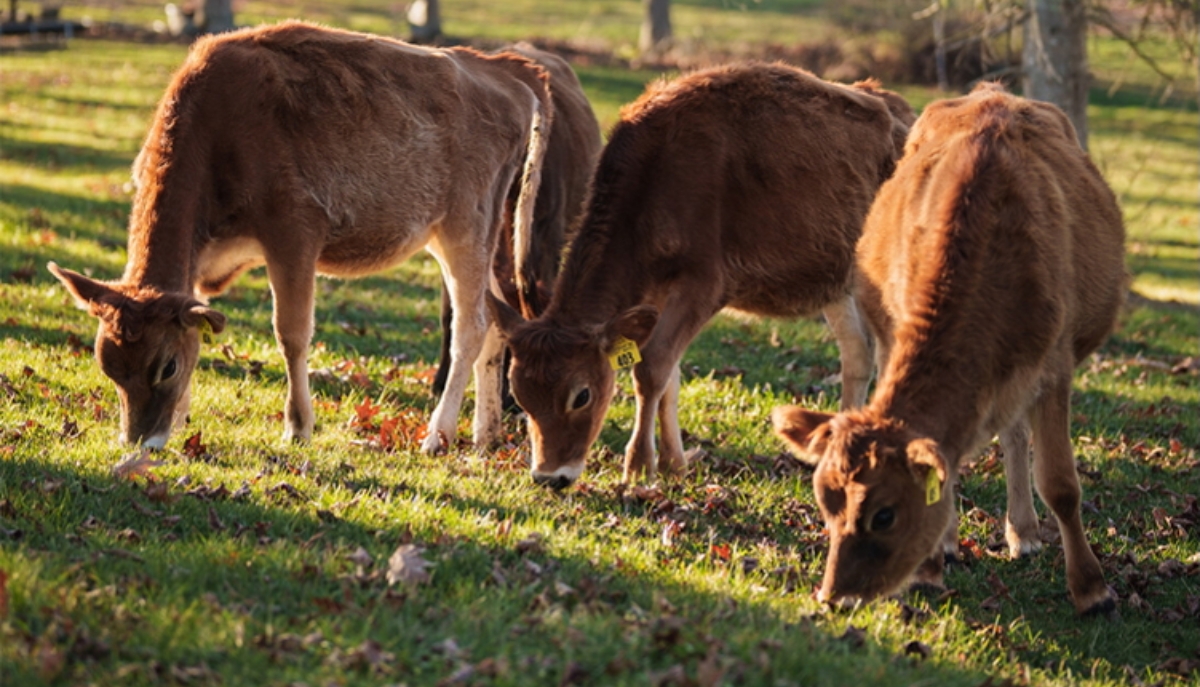
- University of New Hampshire researchers are pioneering the use of internal sensors to continuously monitor cow health in small-scale dairy systems. These small, nondigestible sensors remain inside the cow’s reticulum, where they track vital signs and behavior — such as body temperature, hydration, feed intake and activity — without added labor.
University of New Hampshire. Supported by Hatch capacity funds. See full statement.
- Investing in wearable technologies may help Maine dairy farmers handle ongoing labor challenges and improve farm management processes. These technologies, such as monitoring systems for estrus detection, offer practical solutions to reduce manual labor. An 18-month pilot project helped farmers overcome adoption barriers like lack of technical support and training. Peer feedback highlighted the benefits of sharing experiences and networking with other farmers using similar technologies.
University of Maine Cooperative Extension. Supported by Smith-Lever (3b&c) capacity funds; state appropriations. See full statement.
- Arkansas scientists have developed a machine learning model to predict the presence of animal feeding operations at the parcel level using key predictors such as surface temperature, phosphorus levels and surrounding vegetation. The model was trained and tested using parcel-based data from 18 U.S. states and evaluated against known feeding operation locations. Unlike previous approaches that relied heavily on aerial imagery, which can vary widely by state and livestock type, this method leveraged consistent environmental indicators to identify likely operation sites.
Arkansas Agricultural Experiment Station. Supported by non-profit grants and contracts; state appropriations. See full statement.
- A multistate team based in Kentucky used whole-genome sequencing of 185 North American Thoroughbreds (1965–2020) to measure genetic diversity and inbreeding, finding slightly higher diversity in older horses and a modest rise in inbreeding in newer cohorts while creating a public baseline dataset for ongoing monitoring. The results give breeders and veterinarians a stronger evidence base to track genetic trends and screen for harmful variants that can affect health and performance.
University of Kentucky Agricultural Experiment Station. Supported by Hatch Multistate capacity funds. See full statement.
Photo courtesy of New Hampshire Agricultural Experiment Station.