Well water testing improves public health
Clean and safe water is essential to public health, agricultural productivity and environmental sustainability. Those with private wells are responsible for their own water safety. Without accessible testing, education and coordinated planning, contaminants can threaten drinking water, food safety and ecosystem health, particularly in rural communities.
Here are a few examples of that work:
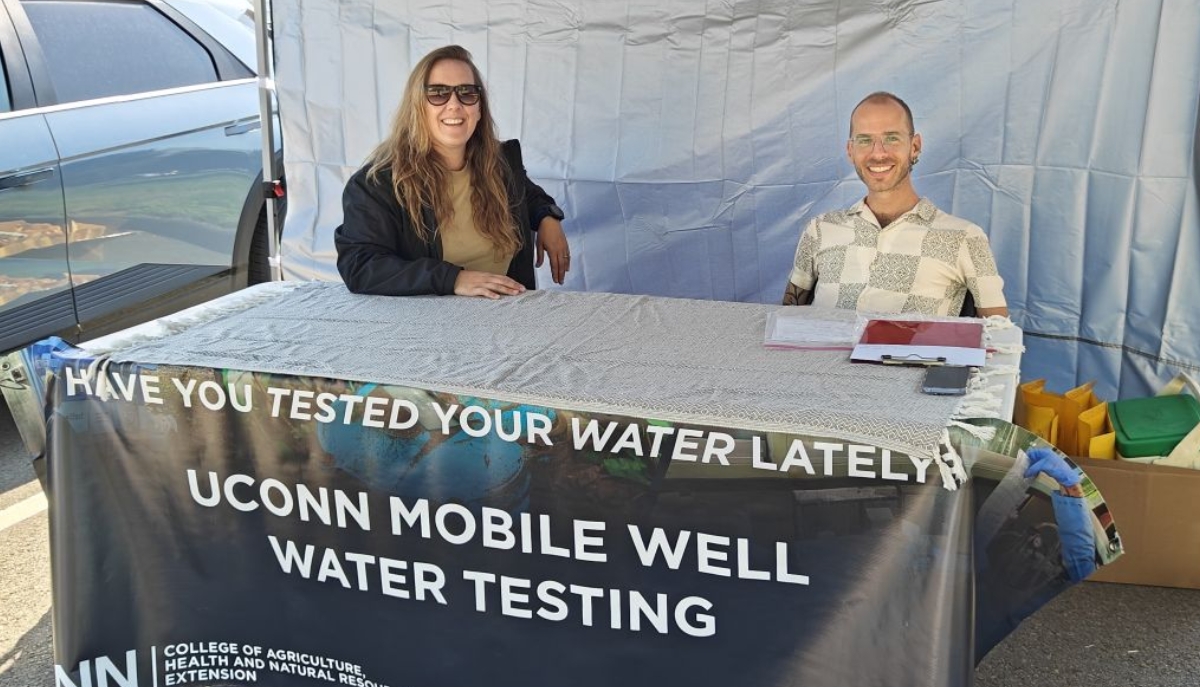
- In Connecticut, 65% of participating households took action to protect their water supply after engaging with Extension programs. Individual families reported improved health outcomes after identifying and addressing well water contamination, demonstrating the direct connection between water quality education and public health.
University of Connecticut Extension; Connecticut Storrs Agricultural Experiment Station. Supported by Smith-Lever (3b&c) capacity funds. See full statement.
- The Oklahoma Well Owner Network provided water quality testing and education across Oklahoma by analyzing over 1,000 private well samples, including 313 in 2025, responding to more than 50 owner inquiries, conducting three K-12 evets, and achieving 90% participant satisfaction.
Oklahoma Cooperative Extension Service. Supported by state appropriations. See full statement.
- Montana analyzed 84,000 samples from over 6,500 wells and found that 75% of watersheds have elevated health risks, mainly from arsenic, uranium, strontium, fluoride and manganese. Watershed-specific guidance is posted on their website and pilot well-testing clinics were held in three counties.
Montana Agricultural Experiment Station; MSU Extension. See full statement.
- In Texas, 1,902 samples were tested in 2025 with 42% positive for coliform bacteria, 8% for E. coli and 10% had nitrate above the drinking water standard. Among 576 samples screened for arsenic in 18 high-risk areas, 161 exceeded the drinking water standard.
Texas A&M AgriLife Extension. Supported by state appropriations. See full statement.
- Rhode Island’s Home*A*Syst Private Well Protection Program safeguards public health and natural resources by providing private well owners with the knowledge and tools to test, maintain and protect their drinking water. Through community education, outreach and partnerships, the program helps ensure access to safe, clean water.
Rhode Island Cooperative Extension. Supported by Smith-Lever (3b&c) capacity funds. See full statement.
Photo courtesy of University of Connecticut Extension.