
Protecting valuable water resources
Water resources that sustain agriculture and communities continue to face critical challenges. Land-grant universities are working to discover new ways to increase water use efficiency, reduce water use and protect water quality.
Here are a few examples of that work:
- Researchers at Cornell University in New York engineered novel enzymes that can break down microplastics into small products that can be used as an energy source for bacteria in the wastewater treatment process. This technology can help to mitigate the 300 million tons of discarded plastic that ends up as toxic microplastics in our wastewater.
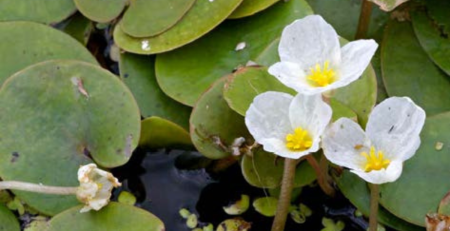
Cornell Agricultural Experiment Station; Hatch. See full statement. - Through train-the-trainer workshops in Indiana, participants learned about weed and fish population management, including ways to improve pond habitat and fish health and size. The workshops are helping Extension educators and conservation managers to more effectively protect Indiana’s 40,000 ponds.
Purdue Extension; Smith-Lever (3b&c). See full statement. - Scientists and students in Georgia conducted a long-term study in a microsprinkler-irrigated pecan orchard to help growers maximize their water use efficiency across seasons. This research can help growers use the right amount of water, enhancing crop yield and protecting bottom lines.
University of Georgia Cooperative Extension; Other USDA Competitive. See full statement. - Oregon Extension professionals, in collaboration with various partners, developed a stream assessment tool to help natural resource professionals manage riparian areas in arid rangelands. This tool helps support biodiversity, improve water quality and sustain rangeland ecosystems for future generations.
Oregon State University Extension Service; Other USDA Capacity – Research. See full statement. - Vermont researchers tested how combining in-field management practices with edge-of-field surface and subsurface runoff treatments impacted nutrient pollution in waterways. They found that stacking these nutrient management improvements removed 80% of total phosphorus and 95% of soluble reactive phosphorus from subsurface flow, providing farmers with important management strategies that help protect Vermont’s water bodies.
University of Vermont Extension; Smith-Lever (3b&c). See full statement. - Research in Maryland demonstrated the capacity of individual trees and clusters to reduce rainwater runoff and improve and protect water quality in the critically threatened watershed of the Chesapeake Bay. Their findings can play significant role in urban stormwater management designs where conservation programs often give credits for planting urban trees and forests.
Maryland Agricultural Experiment Station. See full statement.
Supporting co-management of Wisconsin’s lakes
Wisconsin’s thousands of lakes are owned by the citizens of the state and managed by the Wisconsin Department of Natural Resources. Extension professionals are helping these groups effectively co-manage water resources through a multi-pronged approach. In particular, this support is helping to detect invasive species earlier when they are easier to manage, develop lake and watershed management plans, design and implement shoreland restoration projects and conduct effective outreach and education campaigns.
University of Wisconsin Extension; Smith-Lever (3b&c), State Appropriations. See full statement.
Photo courtesy of Purdue Extension.