Land-grant researchers and Extension educators protect essential pollinators
Pollinators play a critical role in the world’s ecosystems, facilitating the reproduction of flowering plants and ensuring the production of many crops. But many pollinator populations are declining or at risk due to habitat loss, pesticide use and changing environmental conditions. Researchers and Extension educators at land-grant universities across the United States are finding ways to protect pollinators.
Here are a few examples of that work:
- Pennsylvania researchers found that beekeepers who used a variety of treatments for Varroa mites, tiny parasites that can spread disease to honeybees, had higher winter colony survival than those who only used one type of treatment. The findings could inform beekeepers on best management practices to combat high winter colony losses.
Pennsylvania Agricultural Experiment Station; Other USDA Competitive, Hatch Multistate. See full statement. - Texas Extension personnel addressed pollinator loss by hosting an in-person Beekeeping 101 class for 133 participants and a Beekeeping Field Day. After the class, 75% felt they would likely keep bees and 98% had perceived a moderate to extreme increase in knowledge of the materials needed and how to start and manage a hive. At the Beekeeping Field Day, 100% said they felt the field day was helpful overall and 74.2% said the activity influenced them to purchase bees. A survey one year later revealed that 134 hives had been established
Texas A&M AgriLife Extension; State Appropriations, Other USDA Capacity – Extension. See full statement. - Researchers in Guam provided essential information about forage sources for the island’s honeybees. This information informs local beekeepers and environmental and agricultural groups about how to better support healthy colonies and manage weeds and insects without affecting bee forage plants.
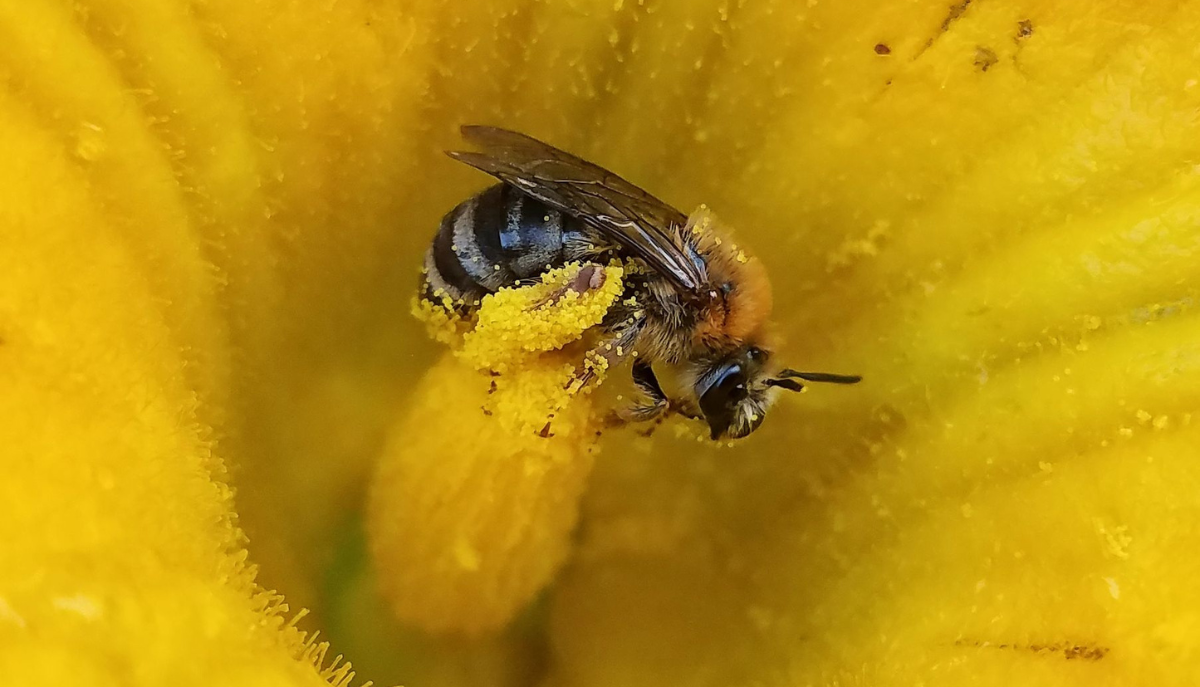
University of Guam Western Pacific Tropical Research Center; Hatch. See full statement. - In Pennsylvania, researchers studied how body mass, environmental conditions and pathogens affected heat tolerance in hoary squash bee populations. They found size, sex and infection status influenced bees’ heat tolerance. Findings help anticipate which populations are more vulnerable to extinction based on local environmental conditions.
Pennsylvania Agricultural Experiment Station; Other USDA Competitive, Hatch. See full statement. - Led by Extension professionals in Colorado, Native Bee Watch trains and supports volunteers to identify and monitor bees, generating valuable ecological data that informs local conservation efforts. In 2024, 67 volunteers monitored bees and submitted data consistently. Volunteers spent over 554 hours bee monitoring and contributed over 4,000 plant/bee observations throughout the state. Ninety-seven percent of volunteers indicated they already or plan to provide pollinator habitat and native plants on their property.
Colorado State University Extension. See full statement. - In Michigan, Extension professionals developed a pollinator protection plan accompanied by a suite of programs to educate farmers, pesticide applicators, home gardeners and the public on reducing pesticide risks and promoting pollinator health. In 2024, initiatives included in-person presentations and online courses. Program evaluations revealed that a high majority of participants intend to implement changes to support pollinator health.
Michigan State University Extension; Smith-Lever (3b&c), Integrated (Water Quality, Methyl Bromide Transition, Organic Transition, Crop Protection/Pest Mgt, RRDCs, Food and Ag Defense Initiative). See full statement. - Bee experts in Vermont are raising awareness about urgent threats to bees. In 2024, a collaborative team finalized seven “Know Your 5” guides, which list the top five bees or
other pollinators that support a particular crop’s pollination. Pollinator-friendly management practices will ultimately help protect bees and other pollinators.
University of Vermont Extension; Other, Smith-Lever (3b&c). See full statement. - Extension professionals in Wisconsin led classes, webinars and question-and-answer sessions to educate horticulturalists, gardeners and other public audiences to better aid pollinators. Over two-thirds of people surveyed indicated that they took tangible action based on the advice they received, such as expanding pollinator habitat, creating bee and butterfly-friendly spaces and reducing pesticide use.
University of Wisconsin Extension; State Appropriations, Smith-Lever (3b&c). See full statement.
Photo courtesy of Pennsylvania Agricultural Experiment Station.