Integrated approach identifies bee protection opportunities in rural, urban areas
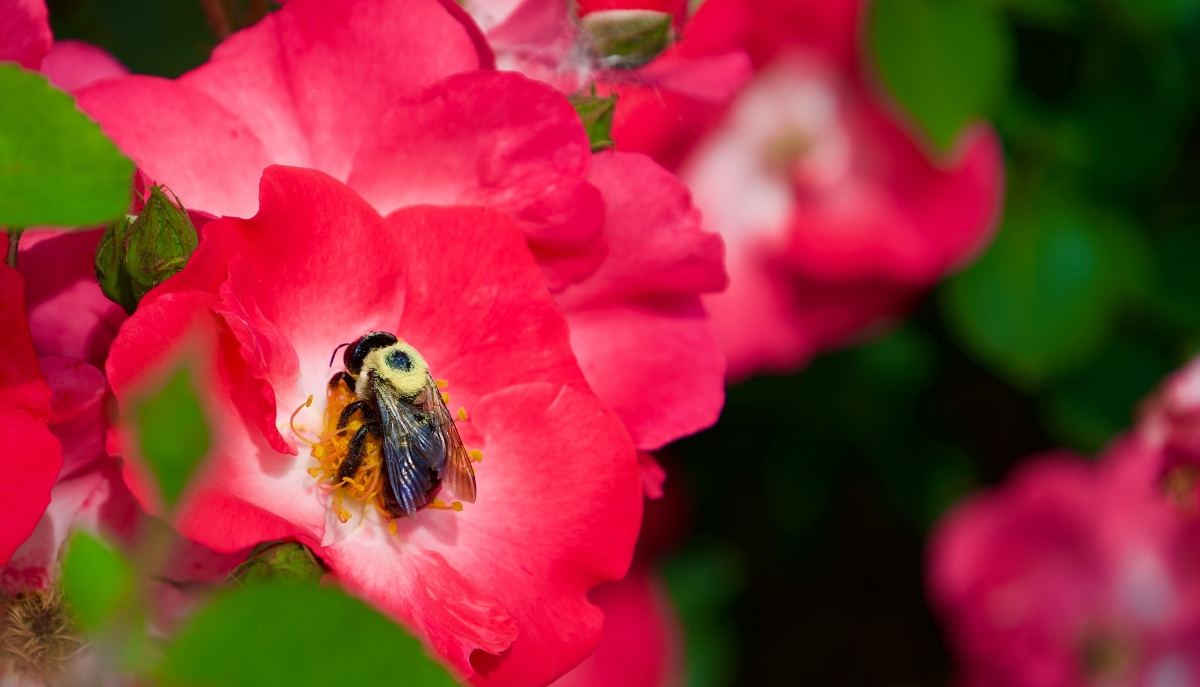
Bees are essential pollinators for many fruits, vegetables and ornamental plants. Continuing declines in their populations jeopardize crop yields, food security and biodiversity. Over 400 bee species live in Ohio, including the federally endangered Rusty Patched Bumble Bee (RPBB), but they are threatened by pesticides, diseases, habitat degradation, heavy metal pollution and changing weather patterns.
Ohio State University researchers assessed the role of bees in improving soybean yields and evaluated the benefits of green infrastructure for urban pollinators. Related research examined potential risks related to pesticide and heavy metal exposure in ag and urban environments. The scientists partnered with the U.S. Fish and Wildlife Service to develop strategies for RPBB conservation, including rapid pathogen detection bioassays and techniques for captive rearing to support reintroduction efforts. Extension outreach provided guidance on pollinator-friendly practices and timing of pesticide applications to reduce impacts on bee populations.
This program is influencing conservation and management practices among broad audiences from federal to local scales. Non-lethal pathogen sampling is now integrated into monitoring programs for endangered bumble bees. The research has demonstrated that adjusting pesticide application timing reduces bee exposure. Urban-scale conservation strategies, such as reducing mowing and allowing weedy plants in vacant lots, improves pollinator habitat while resulting in nearly $3 million in potential savings for municipal budgets. Findings also emphasized the need for testing and remediation of heavy metal pollution to protect bee health.
Ohio Agricultural Research and Development Center; Ohio State University Extension | Project supported by AFRI; USDA competitive funds.