Empowering community resilience
Community resilience support is a critical function of the land-grant system because it equips individuals, families and local organizations with the knowledge, tools and partnerships needed to adapt to economic, environmental and public health challenges. Through research-based education and Extension outreach, land-grant universities strengthen local capacity, promote equity and help communities not only recover from disruption but build long-term stability and opportunity.
Here are a few examples of that work:
- Langston University EFNEP leveraged EXCITE funding and a data-driven targeting strategy to launch the Unity in Immunity campaign, delivering culturally relevant vaccine education to Oklahoma’s highest-need zip codes and generating more than 10 million digital impressions in just four months. By mobilizing trusted community partners, schools, churches and local organizations the initiative expanded access to credible health information, strengthened long-term outreach networks and advanced public health equity while contributing to the EXCITE project’s nationwide impact reaching 23.4 million individuals.
Langston University Cooperative Extension Program. Supported by 1890 Extension capacity funds. See full statement.
- In Pennsylvania, 4-H youths partnered with The Seeing Eye to raise and socialize guide dog puppies, building a pipeline of well-prepared service animals that enhance independence and quality of life for people who are blind. Through hands-on training and community outings, participants strengthened leadership, communication and responsibility skills while contributing to a mission-driven program with lasting public impact.
Pennsylvania Agricultural Experiment Station. Supported by Smith-Lever (3b&c) capacity funds. See full statement.
- In Wisconsin, Extension strengthened the capacity of rural and urban community leaders by providing data, technical assistance and regional coordination tools to address rising housing cost burdens and a statewide housing shortage exceeding 126,000 units. This support led to measurable action, including the launch of a new community land trust with $250,000 in startup funding, strengthened local housing policies and accelerated planning efforts that expand affordable homeownership and stabilize local economies.
University of Wisconsin Extension. Supported by Smith & Lever (3b&c) capacity funds. See full statement.
- In Michigan, the MSU Center for Community and Economic Development strengthened Tribal economic resiliency and sovereignty by facilitating the Tribal Economic Resiliency Fellowship planning process, culminating in a 2025 leadership convening that supported four Tribal Nations in developing actionable, community-driven economic resiliency plans.
Michigan State University Extension. Supported by Smith-Lever (3b&c) capacity funds; state appropriations. See full statement.
- Hawaii strengthened disaster preparedness and community resilience by training 530 youth through the PONO Teen CERT program, equipping teens with hands-on skills in emergency response, first aid, fire suppression and disaster psychology while addressing island-specific preparedness challenges. As a result, participants increased disaster response knowledge by 73% on average and extended emergency planning support to more than 1,600 families, building a new generation of confident, community-based disaster responders.
University of Hawaii Cooperative Extension Service. Supported by USDA capacity funds; non-profit grants and contracts. See full statement.
- In Texas the Community Hazard & Resource Mapping Tools (CHARM) for disaster mitigation transformed 7.5 billion standardized data points across 150 counties into intuitive, open access planning tools, enabling hundreds of rural and small communities to analyze flooding risk, growth patterns, and infrastructure needs without specialized staff. As a result, local leaders and residents now collaboratively explore future development scenarios using real-time, data-driven insights strengthening disaster resilience, guiding smarter land-use decisions and reducing long-term economic vulnerability.
Texas A&M AgriLife Extension. Supported by non-profit grants and contracts. See full statement.
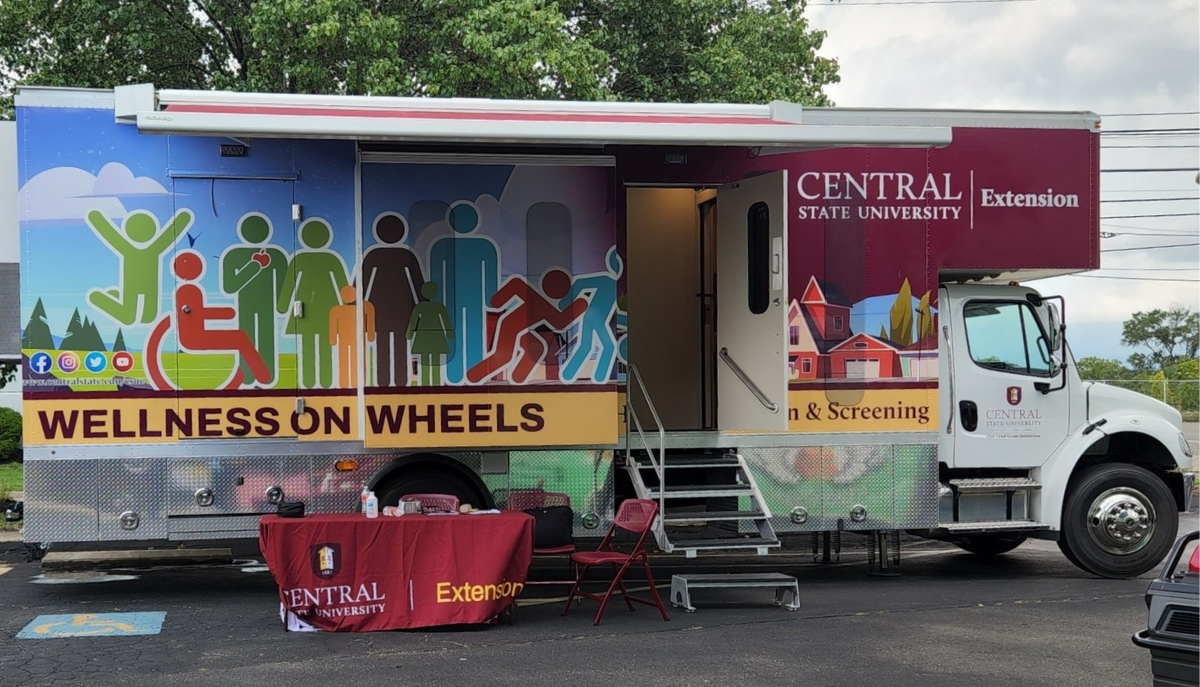
Photo courtesy of Central State University.