Building resilient agriculture through pest management
Land-grant university pest management programs strengthen agricultural resilience by delivering research-based education that helps farmers manage pests more effectively and safely. These programs improve pest control decisions, reduce unnecessary pesticide use and minimize health and environmental risks—supporting healthier ecosystems and long-term productivity.
Here are a few examples of that work:
- Louisiana State University’s AgCenter’s Field Crop Integrated Pest Management (IPM) Program protects Louisiana agriculture from devastating insect pests while reducing production costs and environmental risk. Through scouting-based action thresholds, resistance management and timely Extension support, producers prevent 10–40% yield losses across major crops and save an estimated $46–$63 million annually from reduced insecticide applications. More than 2,000 stakeholders are reached annually, strengthening farm profitability, safeguarding beneficial insects and improving the long-term sustainability of Louisiana’s cropping systems.
LSU Ag Center. Supported by Smith-Lever (3b&c) capacity funds; state appropriations. See full statement.
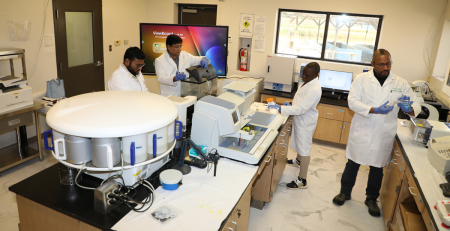
- By applying recommendations from the Purdue Plant and Pest Diagnostic Laboratory (PPDL) in Indiana, clients avoided crop losses and unnecessary pesticide applications, resulting in $890,000 in documented savings. Rapid, accurate diagnoses improved problem understanding (84%), informed better management decisions and led over half of clients to change practices, including adopting cultural controls and preventative strategies. PPDL services helped producers select appropriate treatments, reduce pesticide misuse, improve crop quality and strengthen long-term plant health across agricultural, green industry, and homeowner settings.
Purdue Extension. Supported by Smith-Lever (3b&c) capacity funds. See full statement.
- Oklahoma State University Cotton Integrated Pest Management (IPM) research and Extension programming helped protect Oklahoma cotton from emerging and established pest threats by identifying the first occurrence of reniform nematode in the state and providing timely, science-based management guidance. Through surveys, field diagnostics, weekly scouting updates and multi-platform outreach, growers gained early awareness, testing opportunities and practical IPM strategies to prevent yield losses, reduce unnecessary inputs and strengthen the long-term resilience and profitability of Oklahoma’s cotton industry.
Oklahoma Cooperative Extension Service; Oklahoma Agricultural Experiment Station. Supported by state appropriations; private grants and contracts. See full statement.
- Iowa State University’s AI-powered Pest-ID tool enables farmers and consultants to make faster, more accurate pest management decisions by identifying insects and weeds with 96% accuracy using smartphone photos. By providing real-time, research-based insights on whether organisms are pests, beneficials or harmless—and when action is warranted—Pest-ID helps users avoid costly misidentification, reduce unnecessary inputs and tailor management strategies to local conditions, improving productivity and resilience.
Iowa Agriculture and Home Economics Experiment Station. Supported by Hatch capacity funds; USDA competitive funds. See full statement.
- Maine’s Extension Potato Integrated Pest Management (IPM) Program helped protect a $540 million industry by delivering real-time pest monitoring, forecasting and management guidance to growers statewide. Through scouting, trapping and IPM decision tools, growers reduced unnecessary pesticide applications, avoided significant yield losses from key pests such as Colorado potato beetle and European corn borer, and improved disease management efficiency. In 2024 alone, IPM efforts saved the Maine potato industry more than $6 million, strengthening farm profitability while supporting environmentally responsible production.
University of Maine Cooperative Extension. Supported by Smith-Lever (3b&c) capacity funds; state appropriations. See full statement.
Photo courtesy of University of Arkansas Division of Agriculture.