Research helps increase specialty crop profitability
Specialty crop growers provide popular products to consumers. There are many challenges to growing the products commercially. Land-grant universities support growers with research and resources that help increase profitability and informed decision-making.
Here are a few examples of that work:
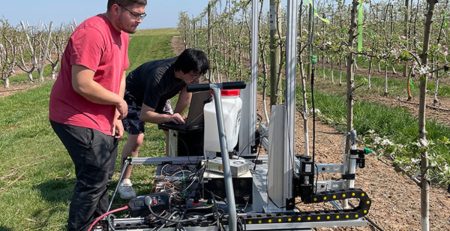
- Apples are a popular product among consumers, but there are many challenges to growing them commercially in the Midwest and making a dependable profit. Researchers in Iowa conducted trials to test for resistance to pests and disease, productivity, hardiness, taste and how well they adapt to trellis systems. The findings supported the switch to new trellis systems that are easier to harvest and more productive per acre, where growers can expect a return on investment after about four years instead of eight or more for traditional orchards.
Iowa Agriculture and Home Economics Experiment Station. Supported by Hatch Multistate capacity funds; USDA competitive funds. See full statement.
- Consumers in New Hampshire rely almost entirely on seedless table grapes imported from warmer regions, limiting local agricultural opportunities and reducing access to fresh, locally grown fruit. In 2022, only 106 acres of grapevines were cultivated statewide, with little research available to guide farmers on varieties and practices. Through a seven-year field study, researchers identified four grape varieties and a training system that provided local farmers with tested options to support the industry and farm diversification.
New Hampshire Agricultural Experiment Station. Supported by Hatch capacity funds. See full statement.
- New pest species and the changing status of established pests require continued innovative research. In Washington, researchers gathered biological and chemical information on two wine grape insect pests that recently appeared, providing growers with the tools to manage the pests and costs effectively.
Washington Agricultural Experiment Station. Supported by Hatch capacity funds; private grants and contracts. See full statement.
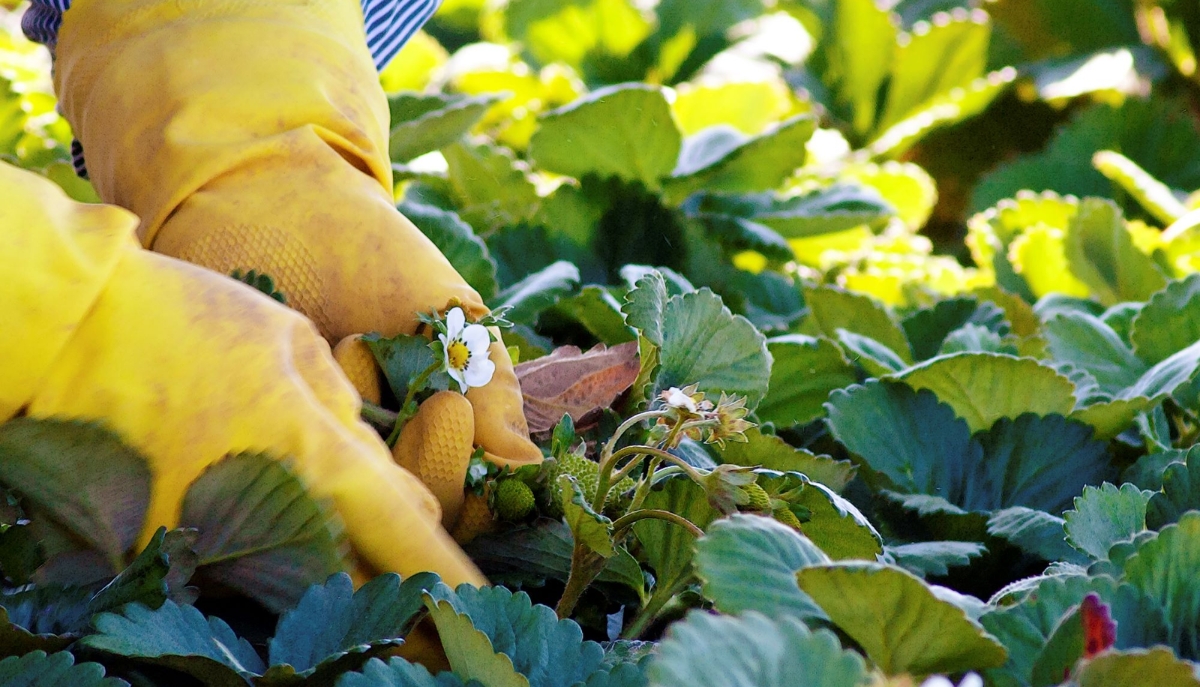
- California produces more than 80% of U.S. strawberries. One method for improving strawberry production is to build resistance to pathogens and diseases directly into the plants. Researchers have released five cultivars for potential industry adoption that support the continued high levels of production while reducing costs and impacts of fumigant use.
California Agricultural Experiment Station. Supported by Hatch Multistate capacity funds. See full statement.
- Just 1.2% of the Maine wild blueberry crop is sold fresh, with the majority (98.8%) sold frozen. Fresh wild blueberries require significantly more labor and on-farm infrastructure, yet there is increasing interest in their production to maintain profitable businesses. At an annual Extension field day, growers learned about fresh pack lines, with 64% indicating they would implement changes based on what they learned. For the 2024 harvest season, six small-medium sized wild blueberry farms signed contracts to test optical sorting machines, saving each farm an estimated $4,200 in labor costs.
University of Maine Cooperative Extension. Supported by Smith-Lever (3b&c) capacity funds; state appropriations. See full statement.
Photo courtesy of Jack Kelly Clark/UC Regents.