Early research helps prepare for new pest invasion in Pacific mangroves
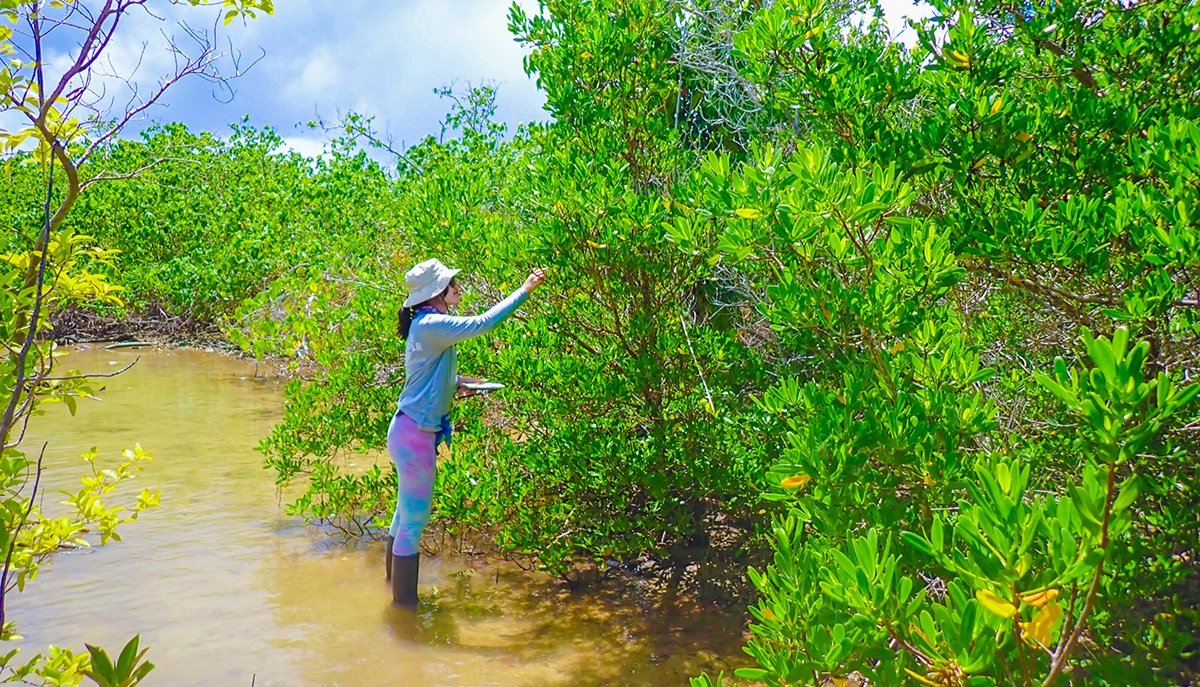
The native mangrove tree Lumnitzera littorea (ngånga’ in CHamoru) is facing a new threat to its small population in Guam’s Sasa Bay Marine Preserve. Low germination rates have signaled an unknown pressure, but similar findings in Sri Lanka have pointed to the presence of micromoths that were infesting and destroying mangrove seeds. These trees provide important ecological functions, including stabilizing coastlines and providing habitat for food fishes and other aquatic species.
A research team at the University of Guam collected seed samples to analyze for the presence of insect frass, larvae and pupae. The researchers also reared adult moths for taxonomic identification. Their study confirmed that a group of micromoths, which had not been previously documented in Guam or in association with this tree species, were affecting mangrove trees in the Pacific islands. Their research showed that the pests prevented germination in 54% to 100% of seeds from individual trees.
The research team continues to explore this new invasive pest’s presence elsewhere in Guam and to study its precise DNA identification. This research will be essential for informing future biosecurity measures and ecological preservation efforts to ensure continued growth of the mangroves.
University of Guam Land Grant agInnovation Research Center | Photo courtesy of University of Guam.