Research at land-grant universities looks to answer complicated disease questions
The basic and applied research that happens in labs at land-grant universities across the country helps to answer questions about the origins of devastating diseases such as ovarian cancer, early-onset Alzheimer’s, kidney fibrosis and Zika virus by diving into disease modeling, gene identification, cancer receptors and cell aging. This research works toward preventions, therapies and perhaps even cures.
Here are a few examples of that work:
- Many people with longstanding diabetes eventually develop kidney fibrosis — a major cause of kidney failure. Once it progresses, there are limited options beyond dialysis or transplantation. Current treatments mainly focus on controlling blood sugar and blood pressure, but there’s no cure that stops or reverses the scarring or fibrotic process. Researchers in Illinois are doing fundamental work to change that. They have found that diabetic patients have significantly more corisin — a toxic peptide made by Staphylococcus bacteria in the gut microbiome — than their healthy counterparts. Corisin speeds up aging in kidney cells, setting off a chain reaction from inflammation to cell death to a buildup of scar tissue, eventually resulting in the loss of kidney function and worsening fibrosis. The research suggests that blocking corisin, either with antibodies or other targeted therapies, could slow down or prevent kidney scarring in diabetics, enhancing the quality of life for patients.
Illinois Agricultural Experiment Station. See full statement.
- Early-onset Alzheimer’s disease, a devastating and rare inherited form, strikes people as early as in their 30s. In a groundbreaking step toward understanding and, ultimately, preventing Alzheimer’s disease, researchers in Missouri have created a novel genetically engineered pig model that mirrors a key genetic mutation found in humans with early-onset Alzheimer’s. As the models age, the team is tracking brain changes using non-invasive imaging techniques, helping researchers see what’s happening in the brain before diagnosis — something that could eventually help early intervention — and perhaps even prevention.
University of Missouri Agricultural Experiment Station. Supported by National Institutes of Health. See full statement.
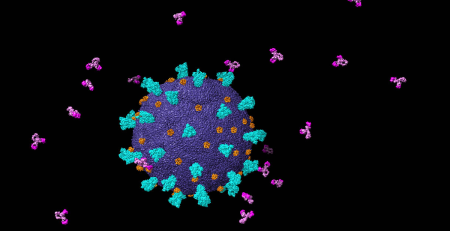
- While most people who contract the mosquito-borne Zika virus have mild or no symptoms, the disease can also cause sudden paralysis and neurological complications, including Guillain-Barré syndrome. To better understand how the virus causes paralysis and how people recover from it, researchers in Utah turned to a mouse model of infection, identifying genes linked to Zika-induced paralysis and recovery. These findings are a critical step toward developing better therapies, prevention strategies and other approaches for managing Zika and related viruses, such as West Nile. While Zika is in decline from its global peak, learning how to treat this neurological disease now is the best way to ensure the virus remains manageable in the future. This research will inform future studies and disease control efforts, which in turn reduces the potential health and economic impacts of Zika and similar emerging viruses.
Utah Agricultural Experiment Station. Supported by Hatch capacity funds. See full statement.
- Ovarian cancer is hard to detect, aggressive and often spreads within the abdomen, leading to one of the lowest cancer survival rates. Researchers in Virginia are studying how abdominal obesity aids growth and spread of ovarian cancer, finding that obesity changes the environment in the abdomen, impacting the survival of ovarian cancer cells during their transport to other organs. Next, researchers are looking at how special receptors help cancer cells stick and grow, to see if blocking these receptors could stop the cells from surviving and spreading. These findings could lead to new drugs that stop cancer cells from growing, suppressing or delaying cancer development and improving survival for women with ovarian cancer.
Virginia Agricultural Experiment Station. Supported by Hatch capacity funds. See full statement.
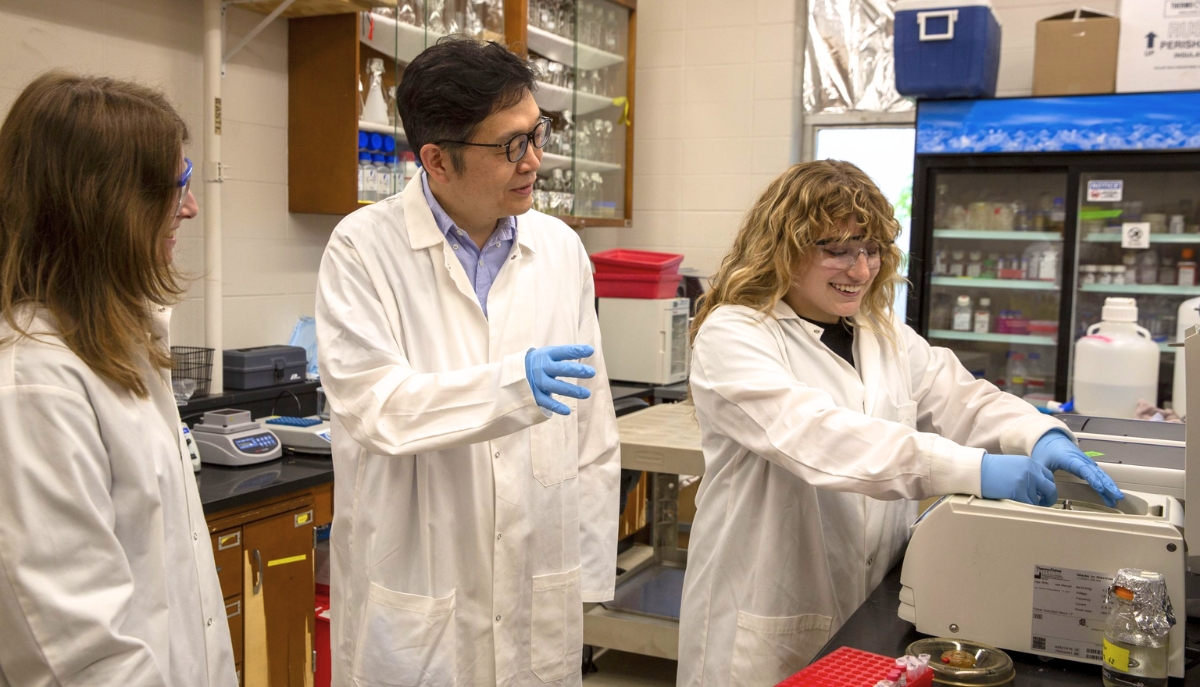
Photo courtesy of University of Missouri Agriculture Experiment Station.