
Drone-based monitoring of water bodies allows for earlier detection of ecological threats
Toxic blue-green algae blooms of cyanobacteria in water bodies can pose significant environmental and public health risks. Collecting and analyzing single samples from these harmful algal blooms is time consuming and can expose researchers to harmful toxins.
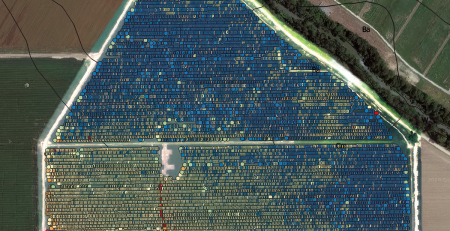
To address these limitations and risks, University of New Hampshire researchers used an unpiloted aerial system (UAS), or drone, with a multispectral sensor to remotely monitor potential harmful algal blooms in lakes with a multispectral sensor that captures high-resolution imagery. They validated the spectral imagery data by also sampling for concentrations of chlorophyll-a and phycocyanin at selected sites, reducing their exposure to potential toxins.
The remote collection of data proved over 90% effective in accurately detecting harmful algal blooms and was significantly faster than traditional monitoring approaches, offering a safer alternative for environmental specialists and enabling a more immediate response to emerging blooms.
This research highlights the potential for emerging technologies, such as UAS, to safely and more efficiently monitor ecological systems before they become significant problems. Early detection of public health concerns ensures safer recreational spaces for people and pets and protects important economic drivers for communities.
Project supported by McIntire-Stennis funds.