Protecting our water
Water continues to be one of the most critical challenges facing agriculture and communities. Land-grant universities are working to discover new ways to increase water efficiency, reduce water use and protect water quality.
Here are a few examples of that work:
- Researchers in Ohio are working to improve soil health and water quality through best agricultural management practices to prevent non-point-source nutrient runoff in agricultural watersheds. Results of modeling were used to develop plans to increase adoption of these practices for watersheds in a 20-county region in Southwestern Ohio.
Central State University; project supported by Evans-Allen and USDA capacity funds. See full statement. - Alabama Cooperative Extension hosted drug take-back events that yielded 1,575 pounds of medication that was correctly disposed of and kept out of the water system.
Alabama A&M University; project supported by 1890 Extension Capacity funds. See full statement. - More than 80% of Kansas is dealing with ongoing drought conditions. More than 90% of homeowners who participated in a university training program said they are implementing the water conservation practices learned.
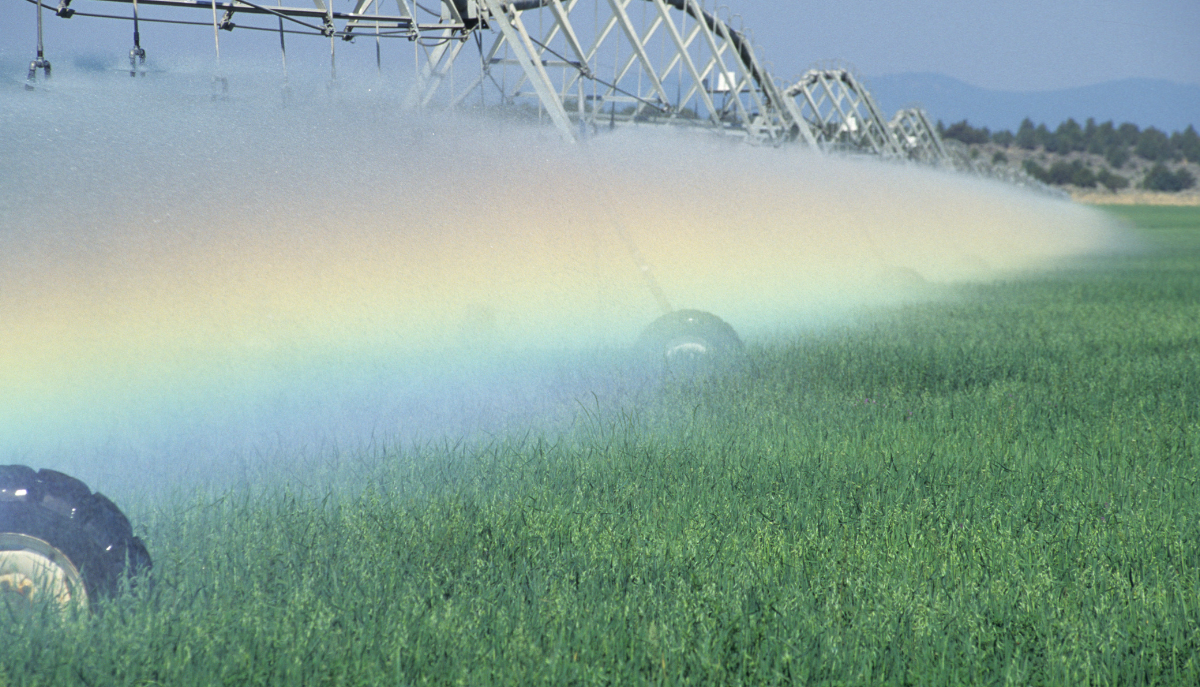
Kansas State University; project supported by Smith-Lever (3b&c) funds. See full statement. - In a pilot study conducted at the request of alfalfa growers in water-depleted northern Lake County, Oregon, Extension found that low-elevation sprinkler systems increased yield by about 10% compared to mid-elevation sprinklers. A 10% increase at today’s average supreme quality hay prices, which is $400 a ton, would increase cash input by $130 a ton.
Oregon State University; project supported by state appropriations. See full statement. - Researchers in Pennsylvania developed a low-cost, easily implemented, internet-connected automatic irrigation-scheduling system that conserves water while also raising crop production. This simple and relatively inexpensive technology demonstrates how precision agriculture can help growers avoid plant water stress at critical growth stages based on site-specific conditions.
Pennsylvania State University; project supported by USDA Competitive and Hatch Multistate funds. See full statement. - Water quality in Long Island Sound impacts residents throughout the region. Researchers in Connecticut made existing data publicly available in an easy-to-use dashboard tool to help decision makers and improve nitrogen levels over time.
University of Connecticut; project supported by Hatch funds. See full statement. - Education efforts in Minnesota have reached 2,000 adults and 250 youths. Now, community leaders, public health leaders and rural family practice physicians are better able to build awareness and spur action to mitigate water quality issues for private well owners in rural communities. And people throughout southern Minnesota and members of the White Earth Nation in northwestern Minnesota are able to plan and conduct well water screening clinics.
University of Minnesota; project supported by Smith-Lever (3b&c) funds. See full statement.
Critical moments impact water quality in Chesapeake Bay
The vast majority of nutrients and sediment washed into streams flowing into the Chesapeake Bay are picked up by deluges from severe storms that occur on relatively few days of the year. Pennsylvania researchers found that a small percentage of locations and events contribute the most to total annual pollution loads and stressed the importance of concentrating agricultural pollution mitigation efforts on “hot moments” — not just “hot spots” — across impaired watersheds. This critical shift in approach allows watershed planners and managers to develop low- and high-flow targets for nutrient and sediment loads specific to each watershed in the bay’s basin.
Pennsylvania State University; project supported by Hatch Multistate and Hatch Capacity funds. See full statement.
Photo courtesy Bob Rost, Oregon State University.