Promoting research-based solar development
With the growth and expansion of solar energy production, producers and consumers in rural areas frequently express concern over whether solar development may compete with farmland availability or affect property values and local economies. For example, solar growth in Arkansas included 1,100 megawatts added in 2024, prompting questions about its impact on agricultural land use.
To address these concerns, a research team at the University of Arkansas mapped current and planned utility-scale solar installations, defined as projects of 20 megawatts or larger. Across the state’s 75 counties, the researchers found that 11 counties currently have utility-scale solar arrays. By 2026, the researchers estimate that solar installations will occupy 0.2% of Arkansas’s 13.7 million acres of farmland as four additional counties are expected to add projects.
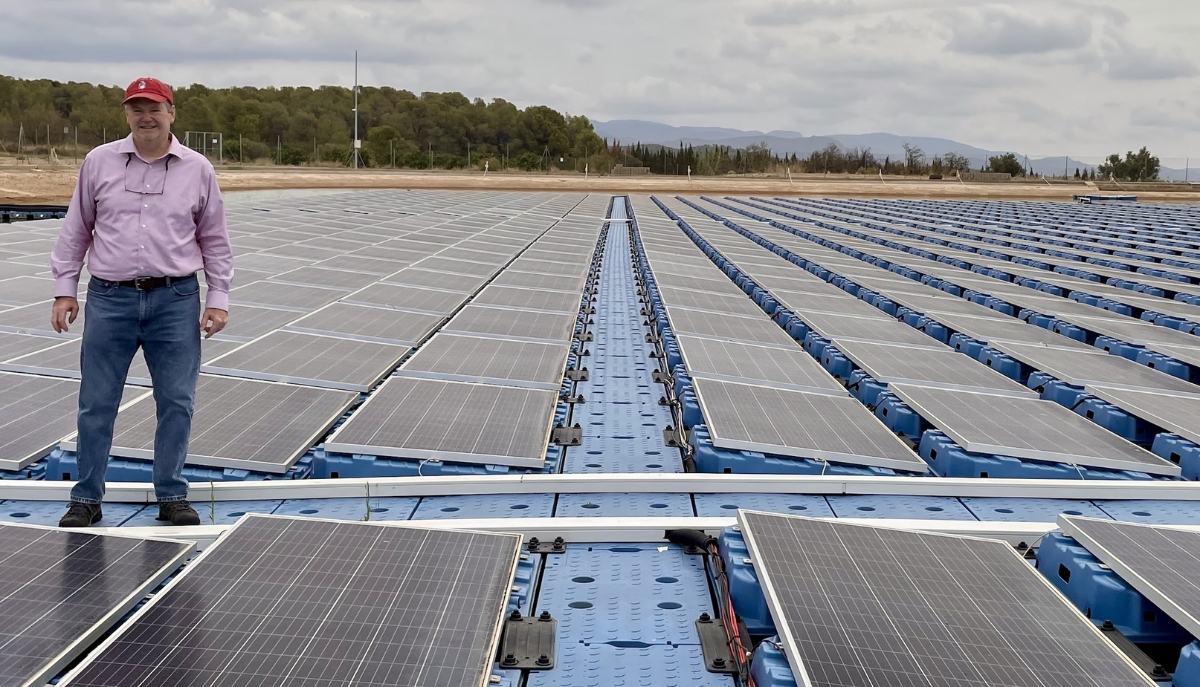
The team modeled potential land use scenarios, finding that if the state were to double its electricity generation capacity using only solar power, total land use would remain under 1% of agricultural acreage. Their study also provides emerging opportunities for agrivoltaics, which combine solar energy with agricultural practices such as sheep grazing or beekeeping, and for floating solar arrays on irrigation reservoirs to further limit land-use competition.
This research provides stakeholders with data-backed projections that can help inform careful planning and continued integration with agriculture to ensure economic and environmental benefits across communities.
Arkansas Agricultural Experiment Station | Project supported by state appropriations; Hatch capacity funds. Photo courtesy of University of Arkansas Division of Agriculture.