Collaborative planning strengthens tribal economic resiliency and leadership capacity
Tribal Nations continue advancing economic resiliency efforts for their communities grounded in sovereignty, cultural values and priorities. Strategic planning that reflects Tribal governance structures, supports internal capacity and strengthens leadership skills is essential for addressing complex challenges related to housing, food sovereignty, financial literacy and long-term community well-being. Creating space for Tribal leaders to collaboratively reflect, refine plans and build shared understanding supports durable, self-determined economic development.
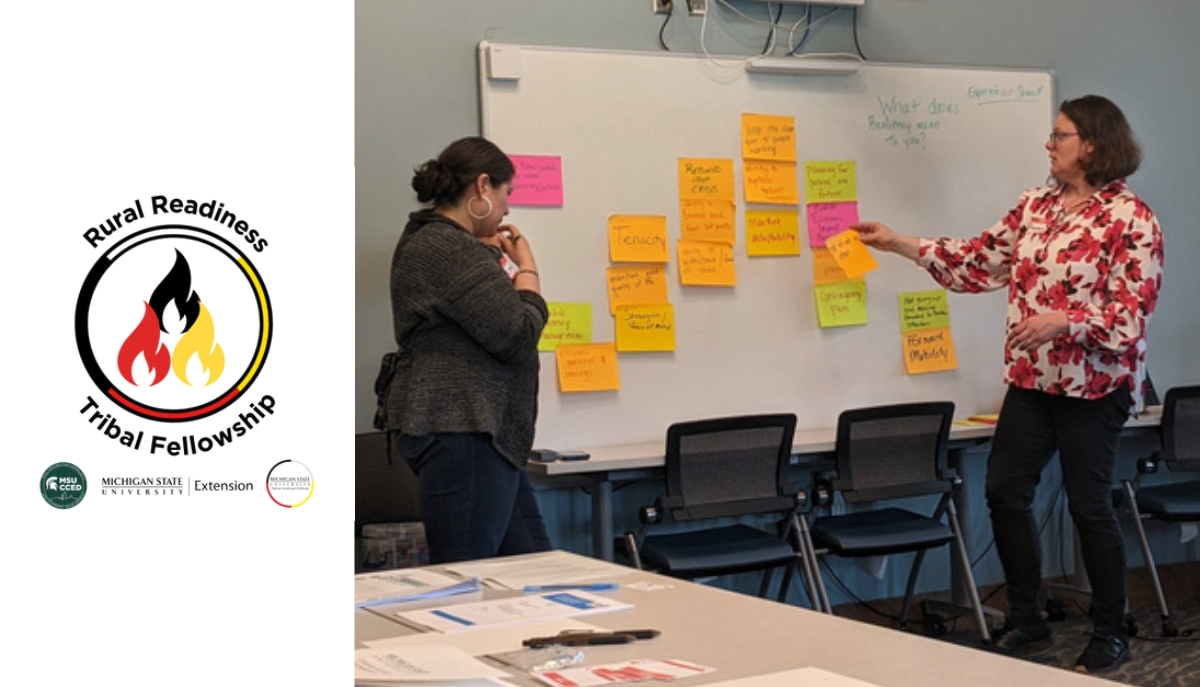
Michigan State University Extension and the MSU Center for Community and Economic Development facilitated the planning phase of the Tribal Economic Resiliency Fellowship, culminating in a multi-day leadership gathering in Lansing, Michigan in summer 2025. Tribal leaders from the Keweenaw Bay Indian Community, Sault Tribe of Chippewa Indians, Saginaw Chippewa Indian Tribe and Bay Mills Indian Community met with Extension educators and university, state and national partners to complete action planning and identify next steps for implementation. The gathering included reflection on the yearlong planning process, refinement of Tribal-specific economic resiliency action plans and tailored professional development focused on facilitative leadership, conflict communication and public engagement strategies.
The process resulted in finalized, actionable economic resiliency plans for each participating Tribal Nation, outlining measurable projects, each supported by a designated Tribal economic resiliency staff position. Priority areas included housing data and project management, financial literacy, internal strategic planning frameworks, food sovereignty initiatives and cultural storytelling and archival work. Tribal leaders emphasized that the collaborative process and resulting plans were highly valuable, with several initiatives — particularly in food sovereignty, financial education and cultural preservation — already progressing within existing Tribal efforts.
Participants strengthened their leadership capacity through advanced facilitative leadership training and reported increased confidence in active listening, group engagement and navigating conflict. The gathering reinforced partnerships between Tribal Nations and MSU, establishing a shared commitment to ongoing collaboration, communication and refinement of resiliency strategies.
Michigan State University Extension | Project supported by Smith-Lever (3b&c) capacity funds; state appropriations. Photo courtesy of MSU Center for Community and Economic Development.