Securing agriculture’s future through successful farm transitions
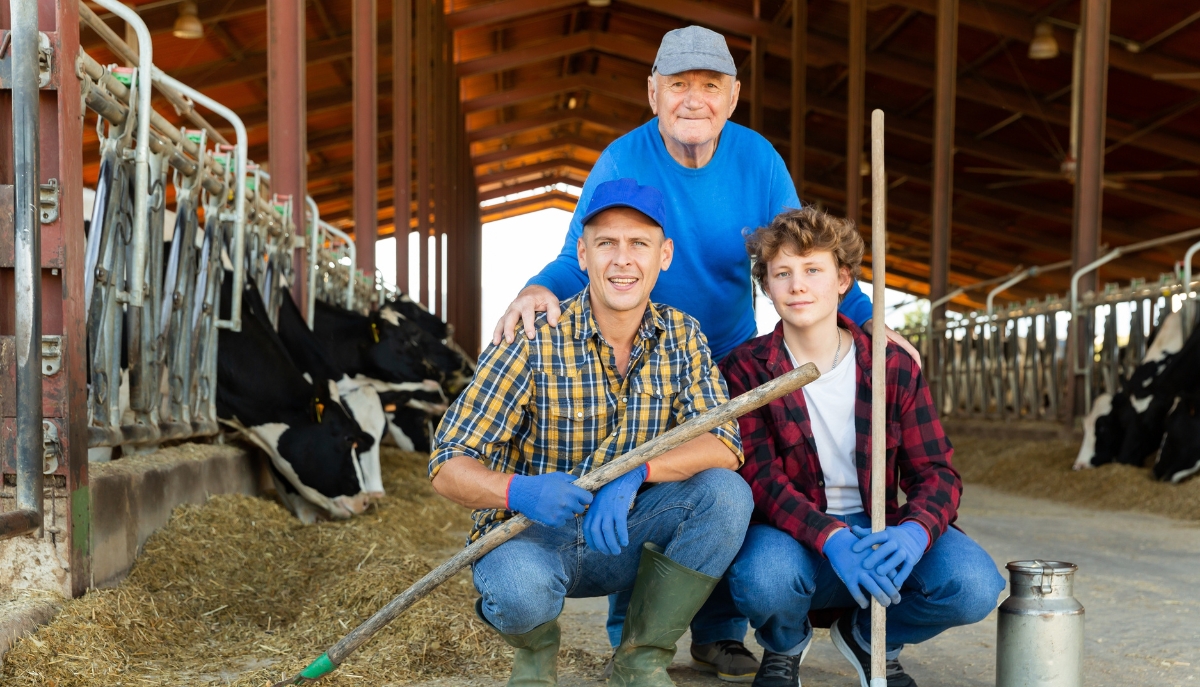
Kansas State Extension, University of Nebraska-Lincoln and Purdue University Extension in Indiana helped families ease the transition of farms to the next generation through a four-session educational series.
Keynote presentations were offered online addressing a wide spectrum of succession planning. From gaining a better understanding of family motivations and communications, to the complex financial and legal frameworks that govern farm transfers, attendees were ready to tackle transition challenges back home. While families across the state received research-based information from experts online, 73 Extension agents were at host sites leading hands-on activities that helped participants apply concepts to their own unique situations.
The program reached beyond Kansas. In all, 338 Kansas participants engaged in the series, contributing to a three-state cohort of 584 farm families across Nebraska, Kansas and Indiana. Parents, adult children and multiple branches of families attended together.
- Participants reported concrete actions with measurable financial implications, with one participant stating that, because of attending the workshop, they updated their revocable trust and found an estate planner who understands agriculture to help their family.
- Other participants reported that the workshop allowed them to have critical conversations before a crisis occurs, preventing the common scenario where unplanned deaths or disabilities force rushed, suboptimal decisions. One participant said that the series gave their family helpful information about what they should be thinking about and talking through during the transition process.
- Participants also communicated the value of strategic planning in preserving family harmony while keeping productive farmland in operation. One participant said, “I am now looking to see what I want to do with our land to pass it to the sons who are farming it, but also how not to leave out our daughter who has a very successful career of her own but is not involved with the farm.”
K-State Research and Extension; University of Nebraska-Lincoln; Purdue University Extension | Project supported by Smith-Lever (3b&c) capacity funds; county funding.