
In Connecticut, rain gardens show promise for stormwater management
Stormwater management is a challenge that many communities face. Roads, parking lots and similar surfaces make up much of the urban landscape, but rainwater can’t soak into the ground where pavement is present. That increases localized flooding risks and the possibility of untreated pollutants flowing into streams and rivers.
In Connecticut, Extension experts are encouraging residents, businesses and municipalities to embrace rain gardens as a low-cost, nature-based solution. With thoughtful design and plant choices, rain gardens capture and filter stormwater before it enters storm drains, reducing the amount of runoff that goes into waterbodies.
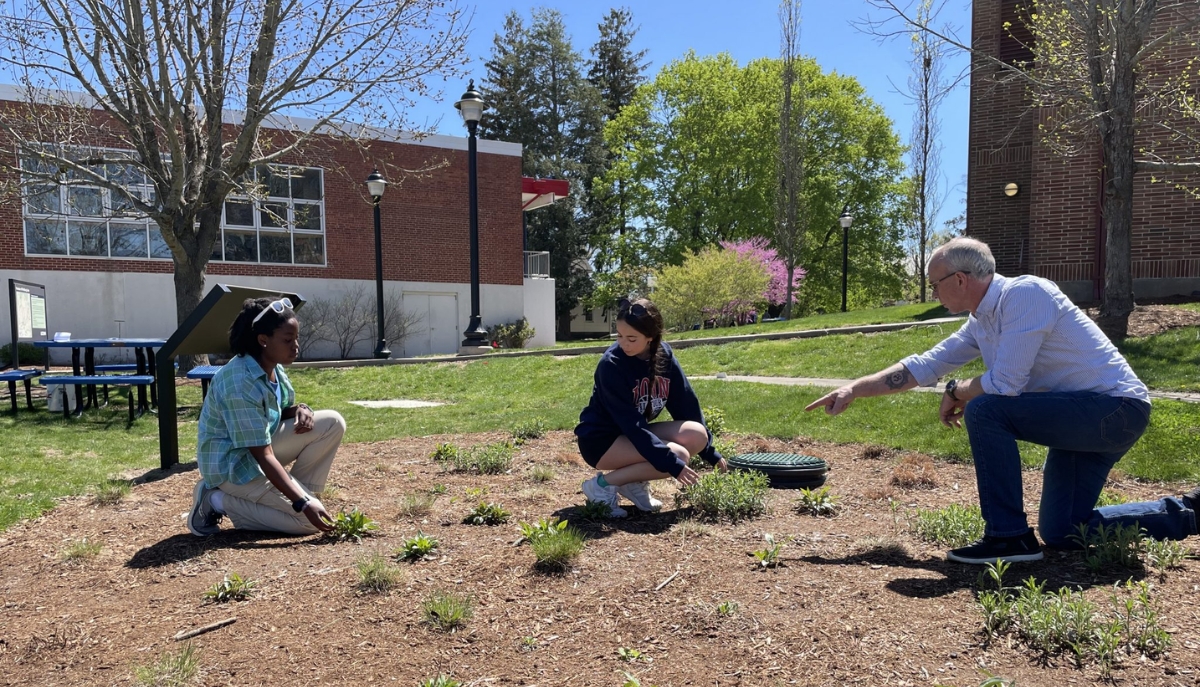
Extension educators developed a comprehensive rain garden education and technical assistance initiative that includes a free online course, hands-on workshops, an interactive mobile app and on-site support. These resources teach about site assessment, garden sizing, soil drainage, plant selection and long-term maintenance. Extension works with students and community partners to demonstrate rain garden installation.
The first demonstration rain garden was installed on the University of Connecticut campus in 2004. Since then, the program has grown. A total of 30 rain gardens and 70 green infrastructure systems, including permeable pavements, have now been installed.
These projects demonstrate that rain gardens can effectively redirect building and parking lot runoff into landscaped areas planted with native species. But reduced puddling and improved water filtration aren’t the only benefits. The gardens also enhance pollinator habitat and raise public awareness of water-related issues.
University of Connecticut Extension; Connecticut Storrs Agricultural Experiment Station | Project supported by Smith-Lever (3b&c) capacity funds. Photo courtesy of UConn Extension.